The moving truck was already halfway into my driveway when my neighbor called and warned me that my family was moving into my mountain house. I left work immediately, driving through the winding Colorado roads with a growing sense of disbelief.
When I finally arrived, I saw my mother standing near the truck, directing movers toward my front porch as if she owned the place. My father stood nearby with a confident smile, looking like someone who believed the matter had already been decided. My sister Lydia was carrying furniture inside, while her children ran through the pine trees excitedly after being told they would have their own rooms.
My mother greeted me like nothing was wrong and casually said, “We all live here now. It’s family property.”
My father then claimed that the $1,000 they had given me years earlier meant they had a stake in the home, even though I had bought the property for $400,000 and paid every expense myself.
When Lydia’s daughter proudly mentioned that Grandma had promised they could stay forever, everything became clear. My family had built an entire future around my house without ever asking me if they could.
I had purchased the three-bedroom mountain home when I was 34 after spending years saving for it. I put down $86,000 and took out a mortgage entirely under my own name.
To me, the house represented independence. It was the first place where I felt like I could finally have my own space without being made to feel guilty for setting boundaries.
A month earlier, Lydia had asked if she and her family could temporarily move in because her lease was ending. I said no because I had seen too many “temporary” family arrangements turn into permanent responsibilities.
I still offered to help her find another place and even offered to pay the first month’s rent directly to a landlord, but my mother called that offer insulting.
For years, she had expected my financial stability to solve Lydia’s problems. I had already helped cover $5,000 during my sister’s second divorce and even gave up our grandmother’s necklace because Lydia wanted it more.
This time, they assumed that showing up with children, furniture, and a moving truck would make refusing impossible.
They were wrong.
I stopped the movers, told them nobody had permission to move in, and asked my family to leave. But my mother only laughed and said I would eventually change my mind because “families share.”
After they left, I immediately replaced the locks, printed copies of my deed, mortgage documents, property tax records, and insurance papers. I also contacted a professional security company to protect the property.
Two days later, my mother sent a message saying they were returning for the official move-in and told me to leave the door unlocked.
I never responded.
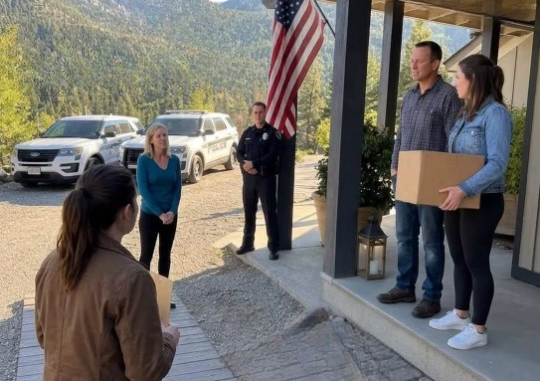
Before sunrise that Saturday, security vehicles were already positioned near my driveway. I stood on the porch holding my keys and a folder filled with proof that the home belonged to me.
Soon, the moving truck arrived, followed by my parents’ SUV and Lydia’s van.
But they stopped when the security coordinator approached.
He calmly asked my mother to provide written permission from the legal owner allowing them to enter.
For the first time, she realized that simply calling something “family property” didn’t make it legally theirs.
My mother demanded that I tell the security team to step aside. My father accused me of taking things too far.
Instead of arguing, I handed them the documents.
I explained that the $1,000 they had given me years earlier was a gift — not an investment, not ownership, and not a legal claim to my home.
My attorney later confirmed that they had no rights connected to the title, mortgage, taxes, or insurance. If they attempted to enter after being denied permission, it could become a legal issue.
Then Lydia admitted something that revealed the entire plan.
She had already given up her apartment, even though she knew I had refused her request.
That was when I understood what had happened: my mother believed guilt would force me to accept a situation I never agreed to.
The sheriff’s deputies reviewed the paperwork, instructed the movers not to unload anything, and confirmed that family relationships or old financial help did not give anyone the right to occupy another person’s property.
Finally, my father looked at my mother and said the words he should have said from the beginning:
“This is her house.”
The vehicles eventually left, and my attorney sent formal notices making it clear that no one could return without my written permission.
Several weeks later, Lydia found a smaller apartment. I returned the belongings her family had left behind without creating another fight.
My father eventually apologized. He admitted that staying quiet had always been easier than confronting my mother. He even returned two spare keys that I never knew existed.
My mother eventually came to the security gate and admitted she had expected me to give in once the children and furniture were already there.
But I didn’t open the gate just because she finally admitted the truth.
I changed the locks again, added more cameras, and placed a simple “Private Property” sign near the road.
Over time, I allowed my family back into my life, but only with clear boundaries. Visits required invitations, and any help I offered came with limits.
The mountain home remained peaceful — not because I shut everyone out, but because I finally understood that owning the door also meant deciding who was allowed to have a key.
Leave a Reply