Snow covered the long driveway of my Montana ranch before dawn when four vehicles pulled up outside my locked gate. Looking through my security cameras, I immediately recognized my father Marcus, my stepmother Linda, and my younger brother Evan standing beside a nervous real estate agent. A locksmith was already working on the keypad, acting as if they had complete permission to enter my property. My father pointed toward the house, accusing me of buying the ranch just to hurt them, while Evan looked beyond the fence at the barn and the forty acres covered in snow. They thought I was away on military duty and would only find out after they had changed the locks and started the paperwork.
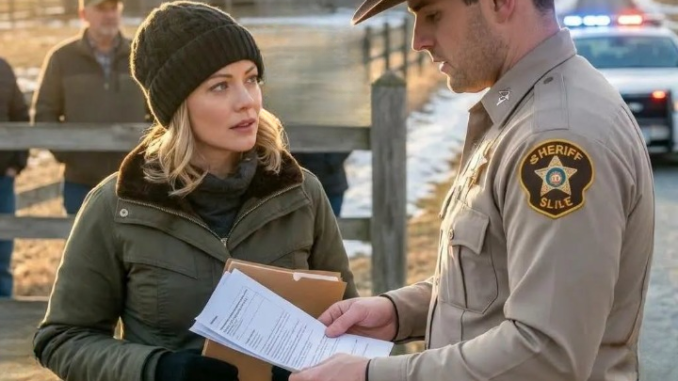
I immediately called Sheriff Walt Hensley and contacted my attorney, then stayed inside while waiting for help to arrive. When the county patrol vehicle finally appeared at the end of the road, I walked onto the porch. The moment my father saw me, his confidence disappeared. He realized I had witnessed everything and that his plan to take control of my home had failed.
Just months earlier, I had driven through a dangerous Christmas Eve snowstorm because I thought my family’s message telling me not to come to dinner had been some kind of mistake. But when I arrived, I saw them celebrating Evan through the window while there was no place set for me at the table.
I had spent years supporting them. I served overseas, sent my father $18,000 when he lost his job, and paid almost $24,000 for two treatment programs when Evan was struggling. Yet somehow, I was always the one expected to give more and ask for nothing in return.
That night, sitting alone in a small diner with a cup of cold coffee and a slice of pecan pie, I made a decision. I was going to create a home where nobody could make me feel unwanted again.
A month later, I bought Carter Ridge Ranch from the bank for $312,000 after Evan’s attempt to purchase it failed because of his damaged credit and unpaid debts. The property came with forty acres, water rights, an old barn, and a small house that needed around $37,000 in repairs. Most importantly, the deed had only one name on it — mine.
I changed the locks, installed security cameras, repaired the roof, and began building the peaceful life I had always put on hold for others.
The first sign of trouble came when I received a letter that had been mistakenly sent to me about Evan’s failed attempt to buy the ranch. Soon after, my father called and demanded that I hand the property over to my brother.
He claimed Evan deserved another chance and accused me of taking something that should have stayed in the family. The irony was that I had never even known Evan wanted the ranch.
When I refused, my father called me selfish and reminded me of everything he had done as a parent, as if raising me had created a debt I was obligated to repay forever.
Later, my cameras caught my father and Evan secretly photographing my gate at night. They left before Sheriff Walt arrived, but I knew they were planning something.
A few days later, they came back with Linda, the realtor, and the locksmith. Their plan was to enter the ranch, change the locks, and begin selling the property while convincing others that I had no real claim to it.
Sheriff Walt stopped them at the gate, but my father continued arguing that being family gave him the right to control my property. That was when my attorney arrived with the certified deed and the documents that exposed the real reason behind their actions.
Evan was buried under more than $96,000 in personal and business debt after a failed investment. His creditors were demanding payment, and my father had promised him that he would soon have access to property he could use as collateral. My ranch had become the solution to a financial problem I never agreed to be part of.
My attorney preserved the security footage, documented the attempted entry, and sent legal notices warning my family, the realtor, and the locksmith that they had no permission to return. The title insurance confirmed that I was the sole owner, and the bank records showed that every payment, repair, tax, and expense belonged entirely to me.
There was no agreement, inheritance claim, lien, or legal right allowing Evan or anyone else to sell, divide, or borrow against the property. Sheriff Walt filed the trespassing report, and my attorney made it clear that another attempt could result in serious legal consequences.
Once the evidence was presented, the realtor walked away, the locksmith packed up his tools, and my family finally left the gate without the ranch they were certain I would surrender.
Weeks later, Evan came back alone. He admitted that he had allowed our father to pressure me because accepting another rescue felt easier than admitting he had failed. I offered to help him find support and create a realistic plan to handle his debt, but I made one thing clear: my home would never be the sacrifice required for his second chance.
My father took longer to admit he was wrong, but eventually he came to the ranch without an audience and apologized. He admitted he had treated my strength as something the family could endlessly use without considering the cost to me.
By spring, things slowly began to change. Evan helped repair the barn roof, Linda occasionally brought homemade bread, and my father started calling before visiting instead of assuming the gate would always open.
We were not suddenly a perfect family, and I never forgot the pain of being excluded or the betrayal of having my home targeted. But the ranch remained mine — a place where healing could happen without me giving up the security I had fought so hard to build.
Protecting my home did not mean closing the door forever. It simply taught my family that being part of my life required something they had forgotten: respect, honesty, and permission.
Leave a Reply