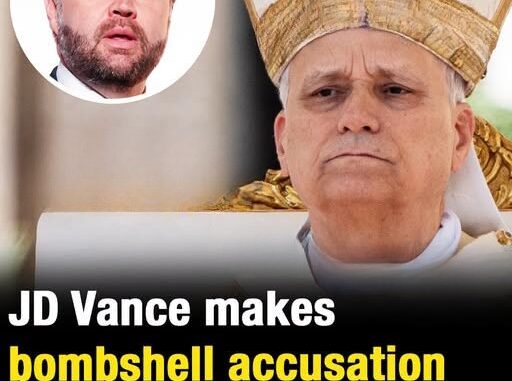
A growing dispute between Washington and the Vatican has evolved into one of the most closely watched political and religious confrontations in recent memory, raising difficult questions about the balance between government authority and moral leadership. What initially appeared to be a war of words has expanded into a broader ideological conflict over who should shape a nation’s ethical direction during moments of international crisis. At the center of the controversy are President Donald Trump and Pope Leo XIV, with Vice President JD Vance adding fuel to the debate through remarks that intensified an already heated exchange. The disagreement has become more than a political feud—it now represents a larger discussion about the relationship between state power and religious influence.
The tensions escalated after Donald Trump publicly criticized Pope Leo XIV, accusing him of taking weak positions on crime and questioning his understanding of international affairs. Much of the disagreement focused on the Pope’s repeated appeals for restraint amid rising conflict in the Middle East, particularly concerning Iran. While the Vatican continued emphasizing diplomacy, peace, and the protection of human life, officials within the administration argued that such statements ventured too deeply into matters of national sovereignty and foreign policy. The controversy grew even larger after Trump shared an AI-generated image depicting himself with Christ-like symbolism. Supporters described it as political satire or symbolic messaging, while many religious leaders and commentators viewed it as an inappropriate blending of political authority with sacred imagery.
The conflict intensified further when JD Vance entered the discussion. As a prominent Catholic convert, his comments attracted particular attention within religious circles. Vance questioned whether the Pope should publicly influence specific government policies, arguing that the Church should provide moral guidance without attempting to shape the practical decisions of elected leaders. His remarks reflected a broader argument that democratic governments—not religious institutions—should have the final say on matters involving national security, diplomacy, and military action. By drawing a firm distinction between spiritual leadership and political decision-making, Vance reignited a centuries-old debate over where moral authority ends and governmental authority begins.
From the administration’s perspective, elected officials are responsible for making difficult decisions that affect national security, economic stability, and the safety of citizens. Those leaders answer directly to voters and constitutional institutions, giving them both the responsibility and the authority to determine public policy. Supporters of this view contend that while religious leaders can offer ethical perspectives, they do not possess the classified information, strategic responsibilities, or democratic mandate required to guide complex foreign policy decisions. Vance’s position reflects a growing nationalist philosophy that places the interests of the nation above the broader moral appeals often advanced by international or religious organizations.
The Vatican and many of its supporters see the matter quite differently. They argue that the Pope’s responsibility has always extended beyond purely spiritual ceremonies to include speaking out whenever human dignity and peace are threatened. Throughout history, popes have frequently challenged political leaders when they believed violence or injustice endangered innocent lives. From this perspective, Pope Leo XIV’s public appeals are not political interference but an essential part of the Church’s mission. Advocates maintain that moral leadership loses its purpose if it remains silent during times of war, believing the Church has an obligation to remind governments of the human consequences behind policy decisions.
Public reaction has mirrored the political divisions already present across society. Supporters of Trump and Vance view their approach as a defense of national independence and elected authority, arguing that American leaders should not be directed by religious institutions on matters of state. Others praise their willingness to challenge long-standing traditions they believe no longer reflect modern geopolitical realities. Critics, however, see the administration’s rhetoric as unnecessarily confrontational and argue that dismissing the Pope’s concerns risks weakening an important moral voice during periods of global instability. Many also expressed concern over the use of religious symbolism in political messaging, viewing it as an erosion of the distinction between faith and government.
What makes this confrontation especially significant is how openly it has unfolded. Although disagreements between presidents and popes are nothing new, direct public exchanges of this intensity have been relatively uncommon. The dispute highlights a broader cultural divide in which long-established institutions increasingly find themselves drawn into highly polarized political debates. It also raises an enduring question that extends beyond the individuals involved: can decisions about war, diplomacy, and national security ever truly be separated from moral responsibility?
As the disagreement continues, neither side appears willing to retreat. Political leaders remain focused on protecting national interests and exercising the authority granted through democratic institutions, while Pope Leo XIV continues emphasizing the ethical consequences of decisions that can affect millions of lives. Whenever political strategy intersects with questions of morality—particularly during periods of international conflict—friction between governments and religious leaders is almost inevitable. Whether this dispute ultimately deepens the divide between faith and political power or encourages a renewed conversation about their respective roles remains uncertain. For now, the confrontation between the White House and the Vatican continues to draw worldwide attention, symbolizing a larger struggle over leadership, responsibility, and the place of moral guidance in modern government.
Leave a Reply