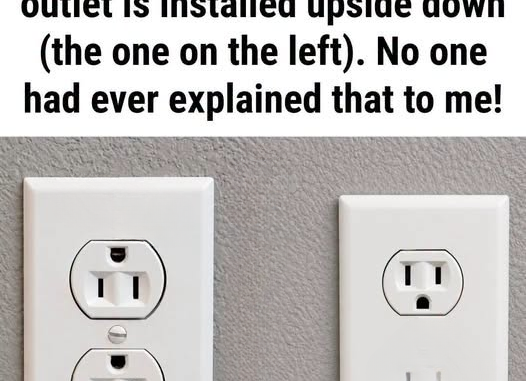
In many older homes—particularly those built without ceiling lights—a wall switch is often wired to control an electrical outlet instead of an overhead fixture. This setup lets homeowners plug a floor or table lamp into the outlet and operate it using the wall switch. To make these switch-controlled outlets easier to recognize, some electricians install them upside down, with the grounding slot positioned at the top. Often, only one receptacle is connected to the switch, while the other remains constantly powered for items such as clocks, phone chargers, or networking equipment.
That said, an upside-down outlet isn’t always connected to a switch. The National Electrical Code doesn’t require outlets to be installed this way, so the orientation can vary based on an electrician’s preference, a homeowner’s request, or specific safety considerations.
If you’re unsure whether an outlet is switch-controlled, the simplest solution is to plug in a lamp or another small appliance and test the nearby wall switches. Identifying which outlets are tied to a switch can help you understand their intended purpose and prevent you from assuming an outlet is faulty when it simply needs the correct switch turned on.
Leave a Reply