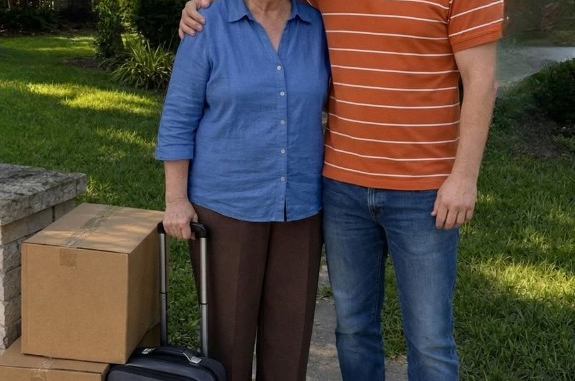
I Spent My Whole Life Protecting My Son From Struggle. Then He Came Back After Months Away and Told Me to Leave My Own Home So He Could Sell It — I Agreed, But He Had No Idea What I Was Planning.
I spent decades making sure my son never experienced the hardships I had faced. So when Jason showed up at my doorstep after months of barely calling, I honestly believed he had come because he missed me.
I was wrong.
I became a single mother when Jason was only three years old. His father, Daniel, died in a highway accident while coming home from work.
One ordinary evening, I was worrying about a broken faucet.
The next, a police officer stood on my porch holding his hat in his hands.
Jason stood behind me wearing dinosaur pajamas.
“Why does that man look sad?” he asked.
I had no answer.
That night, he slept beside me while I stared at the ceiling and made a promise.
My son would still have a future, even if he no longer had his father.
And I kept that promise.
I woke up before sunrise to work at the bakery.
After that, I cleaned offices until midnight.
I skipped vacations.
I wore the same winter coat year after year.
Every sacrifice had a reason.
First braces.
Then school supplies.
Then college.
Everything I did was for Jason.
And he grew into a good kid.
He helped neighbors carry groceries. He called when he was running late. He hugged me after graduation and whispered:
“We did it.”
I smiled.
“You did it.”
“No, Mom. We did.”
I held onto those words for years.
When he moved to Bellford for work, I helped him pack his car and waved until he disappeared down the street.
At first, he called often.
Then less.
Then mostly on holidays.
I missed him, but I was proud.
Jason became successful. He earned promotions, wore expensive shirts, and started talking about investments, equity, and opportunities.
He married Emily, a kind woman who remembered my birthday and mailed handwritten thank-you notes.
They lived downtown in an apartment where the rent kept increasing.
“We’re saving,” Emily told me one Christmas. “Slowly, but we’re getting there.”
Jason looked toward my dining room.
Then toward the staircase.
I noticed.
I said nothing.
My house was never fancy.
Three bedrooms.
Blue siding that needed repainting.
A porch Daniel had rebuilt twice because the first version leaned.
But the neighborhood had changed.
Developers started buying nearby properties.
People began sending offers to longtime homeowners.
I ignored every letter.
Then Jason started asking questions.
“Have you ever had the house appraised?”
“No.”
“You should.”
“Why?”
“Just curious.”
A few weeks later, he asked another question.
“Do you really use all those upstairs bedrooms?”
“Not every day.”
“That’s a lot of unused space.”
I laughed.
He did too.
I didn’t think much of it.
He was my son.
I never imagined I needed to be careful around him.
Then one rainy Tuesday afternoon, someone knocked on my door.
When I opened it, Jason was standing there with an overnight bag.
His hair was wet.
His smile looked uncertain.
For one brief moment, I thought he had finally come home because he missed me.
“Jason!”
I hugged him before he could speak.
“Mom, I need oxygen,” he joked.
“You should have told me you were coming. I would have made your favorite meal.”
“You always do.”
“Because you always arrive hungry.”
He smiled and stepped inside.
But again, his eyes moved toward the stairs.
I made coffee and grilled cheese, the same lunch he loved as a child.
For a while, everything felt normal.
He told me about work.
I reminded him about the time he glued his hand to a school project.
“I was nine.”
“You were confident.”
“I was creative.”
“You cried until the paramedic promised not to tell your teacher.”
He laughed.
Then suddenly he became quiet.
He checked his phone.
Turned it face down.
And stared into his coffee.
“Is Emily okay?” I asked.
“She’s fine.”
“Are you?”
He rubbed his thumb against the coffee cup.
“Mostly.”
I waited.
Mothers know silence can reveal things words avoid.
Eventually, he stood and looked out the window toward the backyard.
Toward the apple tree Daniel planted.
Then he asked:
“Do you ever get lonely here?”
“Sometimes.”
“You’re alone most of the time.”
“Being alone and being helpless are different things.”
He nodded slowly.
“There are nice senior communities now,” he said. “Places with activities, medical support, people around.”
I smiled.
“Are you suggesting I move?”
“Mom, I’m serious.”
“So am I.”
He sat back down.
The room suddenly felt colder.
“You’re living in a house worth more than you need,” he said. “You should move somewhere smaller. Let me sell this place. Emily and I need a down payment.”
I stared at him.
“My house?”
“Mom, you don’t need three bedrooms anymore.”
“Your future depends on selling mine?”
He sighed.
“I knew you would understand. You always said everything was for me.”
I looked behind him at the wall where his childhood height marks still remained.
Daniel’s handwriting was still there.
Six years old.
Eight years old.
Twelve.
Sixteen.
“When would I leave?” I asked.
Relief appeared on his face.
“There’s a senior community near us. I already checked. They have availability.”
“You already checked?”
“I was planning ahead.”
“And the house?”
“I’ll handle the agent.”
I nodded.
“Okay.”
He smiled.
“You’re amazing, Mom.”
That evening, I packed two suitcases.
Downstairs, Jason made phone calls.
He spoke quietly.
But old houses remember voices.
I heard:
“Photographer.”
“Listing.”
“Quick closing.”
Then I heard:
“She agreed. There’s no issue.”
The next morning, Mrs. Alvarez drove me to the senior residence.
Jason kissed my cheek before I left.
“I’ll call tonight.”
“You should call Emily first.”
His smile faded.
“Why?”
“Because wives deserve to know where money is coming from.”
He stared at me.
I closed the car door.
Before leaving, I had already written Emily a letter.
I didn’t insult Jason.
I didn’t exaggerate.
I simply repeated his exact words and explained what happened.
Three days later, while I was sitting in the dining room of my temporary residence, my phone rang.
Jason.
I answered.
“How could you do this to me?!”
I pulled the phone away from my ear.
“Good morning, Jason.”
“Emily left! She’s staying with her sister. She says I lied to her.”
“Did you?”
“You sent her a letter behind my back.”
“I told your wife the truth. What happened afterward was because of your choices.”
“You ruined everything.”
“No. I stopped helping you hide it.”
He accused me of embarrassing him.
Of destroying his plans.
Of changing my mind.
I waited until he finished.
Then I asked:
“Did you tell the bank you were using money from selling my house for your down payment?”
Silence.
“Jason?”
“They needed to know where the money would come from.”
“Did you hire a real estate agent?”
Another pause.
“She’s coming tomorrow to take pictures.”
I looked around the plain little room I had been placed in.
“Then I’ll be there.”
His voice lowered.
“Mom, don’t make this worse.”
“You already did.”
I ended the call.
The next morning, I returned home.
Mrs. Alvarez drove me.
Emily was waiting nearby.
“I need to hear him admit it,” she said.
Inside my house, everything had changed.
Furniture had been moved.
Paint samples covered my hallway.
Boxes labeled “DONATE” sat near the stairs.
My books.
Daniel’s records.
Memories.
Jason had already started removing pieces of my life.
Then he looked up.
“Mom?”
The real estate agent turned.
“You said the owner had moved.”
“I moved for three nights.”
Jason stepped forward.
“She agreed.”
“No,” I said. “I agreed to leave temporarily. I never agreed to sell.”
Emily walked inside.
The agent immediately closed her tablet.
“You don’t have authorization.”
Jason tried to explain.
But it was already over.
The agent left.
I pointed toward the boxes.
“Put everything back.”
He looked shocked.
Then he did.
He returned my furniture.
Removed the paint samples.
Carried every box back upstairs.
He even returned Daniel’s tools to the workshop.
Only after everything was restored did I sit down with him.
“Now explain.”
He stared at his hands.
“I felt behind.”
“That is not an answer.”
“Everyone around me was buying houses. Moving ahead. I kept thinking about this place. It was paid off. And I started seeing it as the solution.”
“You stopped seeing your mother’s home.”
His eyes filled.
“You’re right.”
Emily left that day.
She stayed with her sister.
Jason came back the following Sunday.
I gave him a list.
Repair the wall.
Fix the scratches.
Repaint the hallway.
He did every task without complaint.
Weeks passed.
He started visiting again.
Not because he needed something.
Because he wanted to.
Emily eventually agreed to counseling, but she did not immediately return.
Jason accepted that.
That was when I knew something had changed.
One evening, while repairing the baseboard, he said:
“I thought being a good husband meant proving I could provide.”
“And now?”
“Now I think it means being honest.”
I kept my house.
That summer, I rented the upstairs bedroom to Priya, a nursing student who brought life back into the quiet rooms.
She paid rent.
She cooked spicy food.
She knocked before borrowing anything.
The house felt full again.
Jason still visits every Sunday.
We drink coffee.
Talk baseball.
Argue.
He asks before offering advice.
Last week, he stood beside the wall with his childhood height marks.
He touched the oldest one.
“I forgot this was where I grew up.”
“You remembered eventually.”
He nodded.
“I’m sorry, Mom.”
I looked at Daniel’s handwriting beside the mark.
“I know.”
Then I smiled.
“Now keep remembering.”
Leave a Reply