For fifteen Christmases, I watched my family celebrate without me through social media posts, never understanding why I was always left out. Each year brought a different excuse from my mother—she assumed I was busy, working, or simply choosing to spend the holidays alone. Eventually, I stopped asking altogether.
That changed when my grandmother Vivian died. I didn’t hear it from family—I saw it in a Facebook post. Even at her funeral, I felt like I didn’t quite belong. Weeks later, her attorney reached out privately and warned me not to tell anyone about our conversation. In his office, he gave me a letter my grandmother had written before she passed. In it, she explained that she had always seen the truth: I visited her out of love, not obligation. She had left me the family beach house—the same place where everyone else had gathered for Christmas year after year without me.
For nearly a year, I kept everything quiet. I completed the legal transfer, paid taxes, changed the locks, and quietly documented how my family continued using the house as if nothing had changed. My mother even paid for repairs and improvements, unaware she was investing in a property that no longer belonged to her.
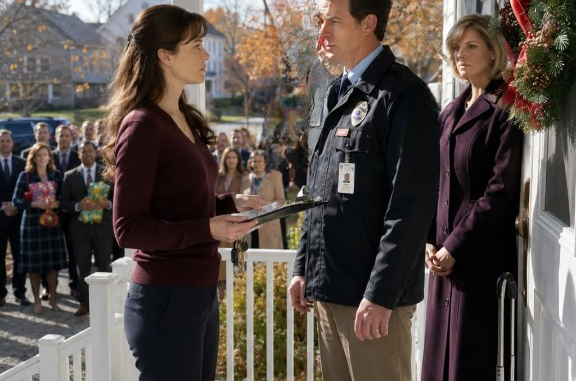
As Christmas approached again, I decided I was done being excluded. I contacted the sheriff’s office, prepared all legal documents, and gathered the paperwork for every family member. On Christmas Eve, I stood inside the beach house wearing one of my grandmother’s favorite colors and waited.
One by one, the cars arrived. My mother, relatives, and children stepped out with gifts, luggage, and the same confidence they always had—expecting the holiday to unfold as it always did.
When my mother’s key didn’t work, I opened the door instead.
The confusion on her face said everything. She demanded to know how I had gotten inside, and I calmly told her the locks had been changed because the house was mine. At first she laughed it off, then argued, then insisted there had to be a mistake. But the deputy present confirmed the legal documents were valid.
For the first time, the truth was unavoidable: my grandmother had left the beach house to me, and no one else had permission to be there. As shock spread across the porch, my mother finally admitted why I had been excluded for so many years. Looking at me reminded her of my late father—someone she had spent years trying to forget.
Suddenly, everything made painful sense. I hadn’t been excluded because I was unwanted or difficult. I had been erased because I reminded her of a grief she refused to face.
I gave them time to gather their things and leave. Some were angry, some confused, and a few later admitted they had simply believed my mother without ever asking me the truth. My aunt Patty stayed behind, apologized sincerely, and handed me another note from my grandmother confirming everything.
In the months that followed, I moved into the beach house, set firm boundaries with my mother, and slowly built a life surrounded by people who chose to be there. The next Christmas was quiet and small, shared with my aunt and close friends—but it was warm and real in a way I had never experienced before.
Later, I found one final letter from Grandma Vivian tucked behind a photo on the mantel. She wrote that I had finally stopped being invisible.
And in the end, that was her greatest gift—not just a house by the sea, but the proof that I had always deserved a place where I belonged.
Leave a Reply