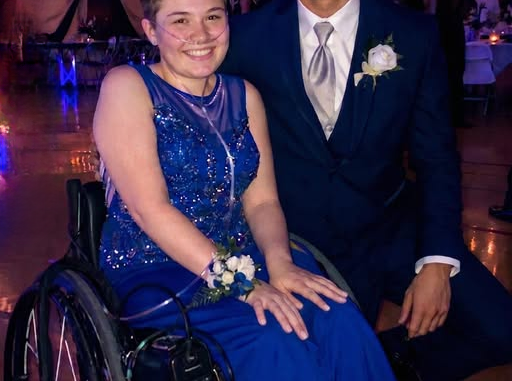
By the time my daughter said she wanted to attend prom, our lives had already become centered around medication schedules, doctor visits, and fragile hope. I thought the most difficult part would be watching her long for one final taste of a normal teenage experience. I had no idea how wrong I was.
The soft hum of the oxygen machine filled our house day and night. It was constant, familiar, and impossible to ignore—a reminder of the reality we lived with every day.
“I still love this dress, Mom,” Nora said one afternoon, running her finger across a picture of a prom gown she had saved months earlier. “Even if I can’t get the exact one.”
“We can find something similar,” I told her.
“I hope so.”
After her latest hospital stay, things were different. The change was impossible to miss.
Her phone buzzed on the blanket beside her. She glanced at the screen before flipping it over.
“Who was that?” I asked.
“Brittany.”
“And?”
Nora shrugged lightly.
“The prom group chat.”
I waited for her to continue.
“They’re talking about dress shopping.”
My chest tightened.
“They didn’t invite you?”
She looked down at the photo.
“No. But it’s okay. People haven’t really been inviting me anywhere lately.”
Then she added quietly, “I just wish I could see prom. Just once.”
After the diagnosis, everything shifted. At first, friends visited regularly. They sent messages, dropped off snacks, and promised to stay in touch. But after Brittany visited the hospital and saw the tubes, the bruises, and the reality of what Nora was facing, the texts became less frequent. Eventually, they stopped altogether.
“People don’t know how to handle sick,” Nora said one evening. “It makes them uncomfortable.”
“That doesn’t make it right.”
“No,” she agreed softly. “But I understand.”
She smoothed the photograph in her hands.
“I don’t even need to stay long. I just want to see the decorations, hear the music, watch everyone dressed up.”
When I returned to her room later, she was still holding the picture.
I brushed a strand of hair from her forehead.
“You really want to go?”
She nodded.
Without giving myself time to overthink it, I stood up.
“Then I’m calling the school.”
Her eyes widened.
“Mom.”
“I’m serious.”
I stepped into the hallway and called the principal, Mr. Green. When I explained the situation, he listened patiently from beginning to end.
When I returned, Nora looked up anxiously.
“What did he say?”
“He said yes.”
Her eyes filled with tears.
“What if everyone stares?”
I sat beside her and squeezed her hand.
“Then let them stare. We’re going to make this a beautiful night.”
A shy smile appeared.
“Can I tell Jude?”
I raised an eyebrow.
“The boy from your Wednesday appointments?”
She laughed softly.
“He’s not a boy. He’s just Jude.”
“Then yes. Tell Jude.”
The following evening, I knelt on the floor and adjusted the hem of Nora’s dress.
It wasn’t exactly like the one in the photograph, but it was close enough to make her beam. The soft blue fabric shimmered beneath the bedroom light while the oxygen tubing rested gently against her skin.
“You look beautiful,” I told her.
Before leaving, I checked everything twice—the oxygen tank, backup supplies, and medication pouch attached to her wheelchair.
“Just in case.”
“I know, Mom.”
“And if someone bothers you—”
“Mom.”
She smiled.
“I know.”
On the drive to school, she hummed along with the radio and stared out the window.
“I still can’t believe Mr. Green agreed.”
“He sounded happy that you asked.”
She nodded thoughtfully.
“I just want to remember something normal.”
White lights decorated the gymnasium entrance. Paper stars hung from the ceiling, and music echoed through the doors.
I parked nearby, unloaded the wheelchair, and helped Nora settle comfortably before securing her oxygen tank.
The moment we entered, conversations seemed to pause.
People looked.
Then looked again.
Whispers began spreading through the room.
I spotted Brittany standing with several girls near the refreshment table. For a brief moment, guilt flickered across her face before she quickly looked away.
Nora kept her head high.
A teacher started walking toward us, probably intending to help us find a quieter place to sit.
Then the music changed.
A slow song began playing.
Couples drifted toward the dance floor while Nora rolled closer to watch.
The expression on her face broke my heart.
It wasn’t jealousy.
It was sadness for experiences illness had taken from her.
Then I noticed someone moving through the crowd.
Tall. Dark hair. Navy suit. Slightly crooked tie.
Jude.
He looked nervous, but determined.
When he reached us, he smiled directly at Nora.
“Hey.”
She brightened immediately.
“You came.”
“Told you I would.”
Then he held out his hand.
“Dance with me?”
She blinked.
“Me?”
He laughed.
“Yeah. You.”
The transformation on her face was instant.
“Okay.”
Gently, he wheeled her onto the dance floor.
Instead of focusing on her wheelchair, he focused on her. He held her hand and swayed with the music, treating her exactly like any other girl at prom.
For a few precious moments, she wasn’t a patient.
She wasn’t defined by her illness.
She was simply Nora.
Then someone laughed.
“Oh my gosh, he’s actually doing it.”
I turned.
A girl was filming them with her phone.
Nearby, another student muttered loudly enough for everyone to hear.
“This is so awkward.”
Brittany stood frozen among her friends.
Nora heard.
I could see it immediately.
Her smile faltered.
Her fingers tightened around Jude’s hand.
Jude leaned closer and whispered something to her, continuing to dance as if nothing else mattered.
But the phone remained pointed at them.
Before I realized what I was doing, I was already crossing the floor.
“Put the phone down.”
The girl hesitated.
I looked directly at Brittany.
“You’ve spent years in my home.”
She shifted uncomfortably.
“I didn’t do anything.”
“You allowed this.”
Fear flashed across her face before hardening into defensiveness.
“She wasn’t supposed to come,” Brittany blurted. “Everyone knew it would be weird.”
Behind me, Nora made a small sound.
I turned and saw tears slipping down her cheeks as she struggled to maintain her composure.
That was enough.
I hurried back to her.
“We can leave,” I said softly.
She shook her head automatically.
“We can go.”
I placed my hands on the wheelchair handles and began guiding her toward the exit.
I had wanted to give her one beautiful memory.
Instead, I had brought her into a room full of teenagers too afraid of illness to show compassion.
Before we reached the doors, Mr. Green stepped in front of us.
“Mrs. Walker, please give me one minute.”
“No.”
His gaze shifted to Nora.
“She belongs here.”
I said nothing.
“One minute,” he repeated.
Before I could respond, he took the microphone from the DJ.
The music stopped instantly.
Silence spread across the gym.
“I need everyone’s attention.”
Every conversation ended.
“We invited Nora tonight because this is her school too. This is her prom too. There was never any question about that.”
The room became even quieter.
The girl holding the phone looked terrified.
Brittany stared at the floor.
Mr. Green continued.
“And let me be clear. Mocking or recording another student is unacceptable. Chaperones witnessed it. Parents will be contacted. There will be consequences.”
Nobody moved.
Several students looked visibly ashamed.
Then Mr. Green’s tone softened.
“A few weeks ago, one student came to me with a simple request. He wanted to help make sure Nora experienced a real prom night—not because she needed sympathy, but because she deserved the same respect and kindness as every other student here.”
His eyes briefly found Jude.
“That’s what decency looks like.”
The words settled heavily across the room.
Then he handed the microphone back.
Jude returned to Nora and crouched beside her chair.
“If you still want to dance,” he said quietly, “I’m here.”
Nora laughed through her tears.
“Okay.”
The music started again.
Slowly, students returned to the dance floor.
A few approached Nora to apologize. One girl quietly tied a ribbon from the corsage table onto her wheelchair.
It wasn’t perfect.
But it was genuine.
And this time, nobody interrupted.
On the drive home, Nora leaned back in her seat, exhausted but smiling.
“Mom?”
“Yeah?”
“Jude’s sister was moved to the oncology floor last month.”
I glanced over.
“He told me tonight. He said he understands how quickly life can change.”
I swallowed hard.
“He sounds like a good kid.”
“He is.”
She looked out the window.
“When he asked me to dance, I forgot about the oxygen tank.”
I squeezed the steering wheel.
“For a little while, I forgot about everything.”
Then she smiled.
“For a little while, I felt like myself again.”
I reached over and took her hand.
“Good.”
My voice almost broke.
When we got home, I helped her back inside and settled her into bed. The familiar hum of the oxygen machine filled the room once again.
At the doorway, I paused and looked back.
The blue dress spread around her like a cloud. Her cheeks still glowed from the evening, and for once the tubes and machines didn’t seem like the most important thing about her.
“Mom?”
“Yes, sweetheart?”
“I’m glad I went.”
I smiled.
“So am I.”
Standing there, watching her drift toward sleep, I felt something I hadn’t felt in a very long time.
Hope.
And the belief that even in the hardest moments, kindness can still arrive exactly when it’s needed most.
Leave a Reply