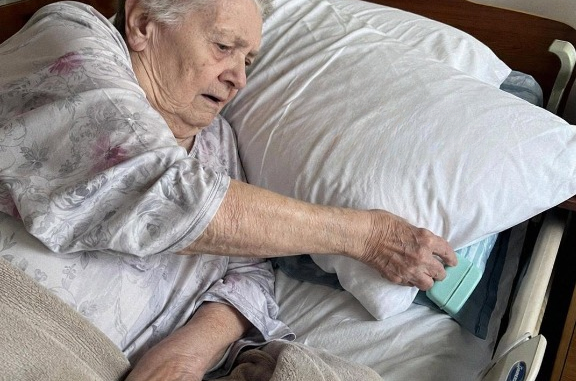
At 50, I believed I had finally made peace with having no family and no real past to hold onto. Then one unexpected call from a hospice nurse set me on a path toward a stranger who knew my name and insisted she had been waiting years to place something in my hands.
I was 50 years old, and until last Tuesday, I thought I had accepted a life of being alone.
I grew up in state care—first in children’s homes, then foster placements, and eventually out on my own.
When I turned 18, I was handed a thin, photocopied file in a manila envelope. It contained basic intake notes, placement records, and a name change entry. There was no usable family history. I was told I had been surrendered young, moved quickly through the system, and that no verified relatives could be found.
So I built a life without answers.
Last Tuesday, I was standing at my kitchen sink rinsing a coffee mug when my phone rang.
Unknown number.
I almost ignored it, but something made me answer.
“Hello?”
A woman spoke. “Is this Eleanor?”
Then she said, “There’s a patient here asking for you by name.”
“Yes.”
“My name is Marie. I’m a nurse at Brookhaven Hospice. I need to ask you something unusual.”
“What kind of unusual?”
“There’s a patient here asking for you by name. She says she has to give you something before she dies.”
“You have the wrong person.”
“I don’t think I do.”
The hospice was four hours away.
“I don’t know anyone there.”
A pause followed.
Then she continued, “She’s refusing food and barely drinking water. She keeps saying she can’t die until Eleanor comes. She’s been holding onto a card for days.”
I sat down without realizing it.
“She gave us your name. And an old address from ten years ago.”
When I arrived at the hospice, Marie met me in the lobby.
“Thank you for coming.”
“I still think this is probably a mistake.”
“Maybe,” she said. “But she gave us your name and your old address. It took a lot to track you down.”
I followed her down the hallway.
At the room, she stopped and said, “Her name is Clara. She used to work in intake support at St. Agnes Women’s Shelter.”
I went inside.
I had never seen her before.
But the moment she saw me, she began to cry.
She lifted a shaking hand from under the blanket.
“Take it,” she whispered.
She pressed something into my palm.
It was an old library card with a child’s photo.
I looked down.
It was me.
Same face. Same eyes. Around three years old.
But the name on the card wasn’t Eleanor.
It read:
Nora – Child Card – Guardian: Clara
“No,” I said.
Clara couldn’t speak through her tears.
“What is this?” I asked.
Her voice broke. “I’m sorry for what I did to your mother.”
And then she began to explain.
Her name had been Lila.
She had come into the shelter with me—injured, scared, and trying to escape an abusive husband. Clara worked intake and referrals, not case management, just emergency paperwork and short-term placement coordination.
Lila had been trying to get away, and I was with her.
Then a housing opportunity came up through a church program. It required immediate acceptance, and Clara told her she would need to place me temporarily to qualify.
She said it would only be two weeks.
But those two weeks changed everything.
During that time, the father began showing up at the shelter, making threats and demanding custody, insisting Lila was unstable. Fear and urgency overtook the process.
Clara filed emergency paperwork and marked the situation as unsafe. She sent me into county custody when the temporary hold expired.
And then she made another decision—one she should not have made.
She told the system Lila had disappeared.
From there, records closed.
Lila came back within days, but by then, I had already been transferred. And without proper documentation, she could not prove custody. Every door she reached for had already been shut.
She kept trying.
Clara broke as she said it.
“She never stopped.”
Years passed. Searches continued in fragments. Shelters. Offices. Public records. Small clues.
Then Clara added something I didn’t expect.
Lila had left behind traces—notes, visits, attempts to reconnect—but nothing was ever enough to reverse what had been recorded.
“She came back,” Clara said. “And she never gave up.”
I left the hospice with more questions than I could hold at once.
And for the first time, I wasn’t sure what part of my life had been truth, and what had been loss created by paperwork, fear, and decisions made in panic.
But I knew one thing had changed.
I was no longer certain I had been abandoned.
Only that I had been found too late.
Leave a Reply