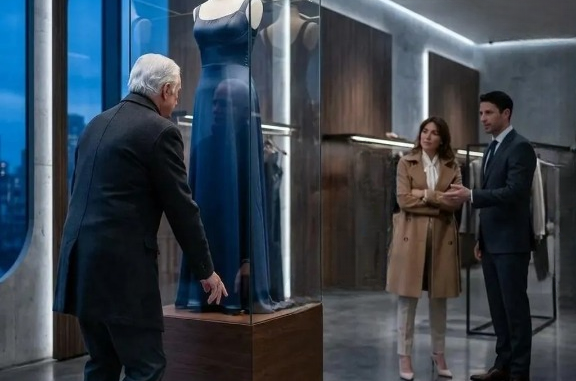
My mother, Evelyn Moore, never imagined that a routine shopping trip would uncover a piece of her past that had been forgotten for decades. But the moment she walked into a department store and noticed a midnight-blue gown displayed under the showroom lights, she stopped in her tracks. There was something instantly familiar about it. The fabric, the stitching, the carefully shaped collar—every detail looked exactly as she remembered. After studying it for a moment, she quietly told a nearby employee that she had personally sewn that dress more than forty years ago.
Most people who overheard the comment smiled politely and assumed it was simply a case of mistaken memory. After all, countless dresses had been made over the years, and it seemed unlikely that anyone could recognize one after so much time had passed. However, a young store clerk named Leah was intrigued. Instead of brushing off my mother’s claim, she decided to take a closer look. As she carefully examined the garment, she discovered something hidden deep inside the lining—a small, faded label stitched where few people would think to look. Embroidered on it was a name that immediately changed the conversation: Evelyn Morrow, my mother’s maiden name. Suddenly, what had seemed impossible became undeniable, and a forgotten chapter of history began to emerge.
As word spread, my mother shared memories of the years she spent working behind the scenes in the store during the 1980s. She explained that the dress was just one of many garments she had helped create alongside a team of talented women who worked in a sewing room on the building’s third floor. Day after day, they designed, stitched, and finished beautiful pieces by hand. Their craftsmanship helped shape the store’s reputation, yet their names never appeared on labels, advertisements, or company records. While the garments became well known, the women responsible for making them slowly faded from memory.
Captivated by her story, store management agreed to let us visit the old sewing room, which had been abandoned for years. Dust coated the worktables, and the once-busy space sat frozen in time. Despite the decades that had passed, my mother moved through the room confidently, recalling every corner as if she had been there only yesterday. Then she stopped beside an old radiator, knelt down, and reached into a narrow hidden gap behind it. To everyone’s astonishment, she pulled out a worn burgundy ledger she had secretly tucked away many years earlier.
Inside the ledger were handwritten notes, names, dates, and personal details about dozens of women who had worked in that room. Every page preserved stories that had nearly vanished from history. The discovery stunned company executives, who admitted they knew very little about the people whose labor had helped build the business. Eager to make things right, they offered my mother public recognition, financial compensation, and a place of honor at an upcoming company celebration. In return, they hoped she would hand over the ledger so it could become part of the company’s archives.
Although the offer appeared generous, my mother felt that something important was missing. The ledger was not simply a record of her own accomplishments. It represented the lives, sacrifices, talents, and contributions of many women whose stories deserved to be heard. For several days she carefully considered her options. After speaking with one of her former coworkers, she finally made her choice.
When the day of the company’s relaunch event arrived, my mother stepped onto the stage before a packed audience. Many expected her to tell the story of finding the dress or discovering the hidden ledger. Instead, she opened the worn book and began reading names aloud. One by one, she honored the women who had spent years creating garments behind the scenes without receiving public credit for their work. She shared their stories, spoke about their dedication, and highlighted the lasting impact they had made despite being overlooked for decades.
As she continued, the room fell completely silent. By the time she finished, many audience members were visibly moved. Then applause slowly spread throughout the venue, growing louder and louder until it filled the entire hall. That moment marked a turning point. Inspired by what they had learned, the company paused its original plans and launched an effort to uncover the histories of the women listed in the ledger. Families were contacted, memories were collected, and a permanent exhibit was eventually created to celebrate their contributions.
In the end, the most remarkable discovery was not the dress itself or even the hidden ledger. It was the realization that my mother had quietly safeguarded an entire piece of forgotten history for more than four decades. Thanks to her determination, the voices of those women were finally heard, their contributions were recognized, and a long-overlooked legacy was given the place it deserved.
Leave a Reply