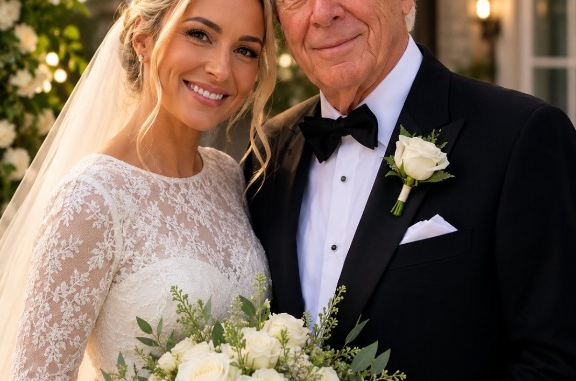
Arthur’s last words caught me completely off guard. Lying in his hospital bed, he placed an old cardboard box into my hands and softly told me that I would not be inheriting any of his wealth. Just outside the room, his three grown children were already disputing who would receive what, convinced that I had married their affluent father for financial reasons. Ever since Arthur and I first met, people had made the same assumption. I was thirty-two, and he was eighty-four, so to outsiders, the conclusion seemed obvious. Yet as I looked into his weary eyes that day, I sensed there was a deeper message he wanted me to discover. He asked me not to open the box until after his funeral, and despite my curiosity, I agreed.
For the two years we were married, I lived under the constant scrutiny of Arthur’s family. His children treated me with suspicion, believing I had entered their lives with hidden motives. In reality, my reasons were much simpler. For most of my life, I had never truly felt settled or at home anywhere. Arthur changed that. He made me feel welcome and valued in a way no one else ever had. Our relationship wasn’t built on extravagance or dramatic romance. Instead, it grew through shared meals, meaningful conversations, daily routines, and the comfort of genuine companionship. One day, Arthur took me to a small cottage by the lake that had once belonged to his late wife, Sophia. The moment I stepped onto the porch, I felt an unexpected sense of belonging, and Arthur noticed it immediately.
As Arthur’s health worsened, his children became increasingly preoccupied with what would happen after his death. They focused on possessions, inheritance, and financial matters, rarely hiding their hostility toward me. When Arthur passed away, that tension carried over from the funeral to the attorney’s office. There, the details of the estate were finally revealed. The mansion, investments, artwork, and other valuable assets were left entirely to his children. When the lawyer announced that I would receive none of the money, Deborah looked pleased, as though her suspicions had been confirmed. Although it hurt to be judged yet again, the story wasn’t over. The lawyer then produced another document and explained that the lakeside cottage was not included in the estate.
The greatest surprise came from a letter Sophia had written years before. In it, she requested that if Arthur ever found someone who restored happiness and peace to his life, that person should inherit the cottage—not as a prize, but as a place to call home. Arthur had respected her wishes and transferred ownership before his death. Later that evening, I finally opened the cardboard box. Inside were photographs, a key, the property deed, and two letters. In his note, Arthur explained that while his children understood the value of money, I understood the pain of loneliness. He knew that what I truly longed for was not wealth, but a sense of belonging. Three months later, I unlocked the cottage with my own key. Arthur had not left me a fortune, but he had given me something far more precious: a permanent home and a place where I would always belong.
Leave a Reply