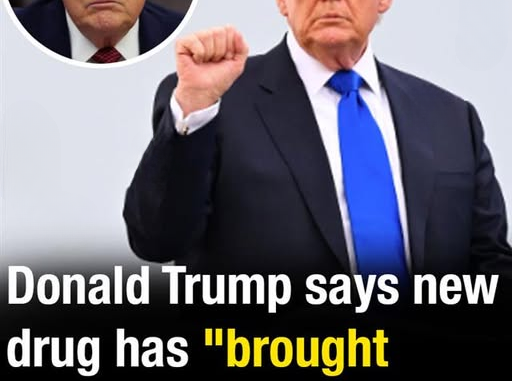
A wave of shock and disbelief has swept across the political world after Donald Trump made an extraordinary claim suggesting that the U.S. government possesses a groundbreaking drug capable of reviving the dead. The statement, which quickly spread across news outlets and social media, sparked intense debate and confusion as people struggled to determine whether it was a serious assertion or a complete fabrication. According to the remarks reported by UNILAD Tech, Trump described the treatment as something he had allegedly seen work in real situations, claiming that individuals who had been declared dead were brought back to life after receiving it.
The reaction online was swift and largely skeptical. Social media platforms were flooded with criticism, disbelief, and mockery, with many users arguing that such a discovery would dominate global headlines if it were real. Others questioned how such statements could be made publicly without correction, expressing concern about the impact of spreading claims that contradict basic scientific understanding.
Some analysts attempted to interpret the comments more charitably, suggesting that Trump may have been referring to the Right to Try Act, a law from his presidency that allows terminally ill patients access to experimental treatments that have passed early safety testing but are not yet fully approved. However, this legal framework is far removed from the idea of reviving clinically dead individuals.
Medical experts emphasize that there is no scientific evidence supporting any treatment capable of reversing death once it has been medically confirmed. By conflating experimental therapies for critically ill patients with the concept of resurrection, the statement has drawn significant scrutiny and concern.
The controversy also fits into a broader pattern often noted by critics, who argue that Trump’s rhetoric frequently stretches or distorts factual reality. Supporters, however, may interpret his language as exaggerated or symbolic rather than literal.
For scientists and public health experts, the incident highlights the ongoing challenge of combating misinformation, especially when it involves high-profile figures. Claims about “secret” or “miracle” cures can undermine trust in established medical institutions and research processes, which rely on rigorous testing and evidence-based approval.
As the discussion continues, the statement has become another flashpoint in an already divided political climate. Regardless of interpretation, experts agree on one point: no known medical technology exists that can restore life after death, and there is currently no evidence to suggest otherwise.
Leave a Reply