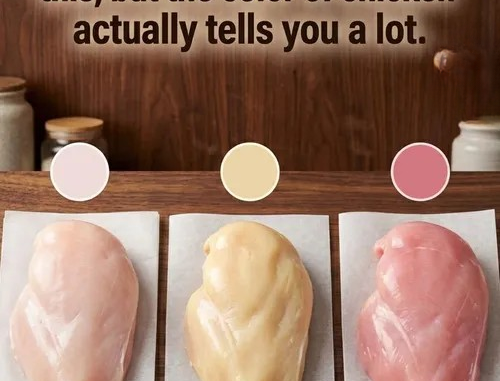
When it comes to chicken, differences in meat color can make people question its quality, taste, or nutritional value. Some pieces look pale or slightly pink, while others have a richer yellow tone. Although it’s easy to assume that one color is better than another, appearance alone isn’t a dependable way to judge quality or freshness. The color is influenced by factors such as the chicken’s diet, environment, and how it was raised.
Paler chicken is often associated with large-scale farming, where birds are kept indoors, fed standardized diets, and bred for rapid growth. This approach prioritizes efficiency and affordability, which is why this type of meat is so common in grocery stores. Limited movement and a controlled diet can affect not only the color but sometimes the overall flavor as well.
On the other hand, chicken with a yellowish tint is usually linked to birds that consume diets rich in natural pigments, such as those found in corn and plants. Chickens raised in more open, natural settings tend to be more active, which can lead to firmer texture and a fuller taste, along with the deeper color.
That said, color can still be misleading. Some producers enhance feed to give the meat a more yellow appearance, even if the chickens are raised in conventional conditions. For a more accurate sense of quality, it’s better to rely on labels like “organic,” “free-range,” or “pasture-raised,” which reflect how the chickens were raised. Freshness is best judged by smell and texture—good chicken should have a mild scent and feel firm to the touch. In the end, choosing chicken comes down to what matters most to you, whether it’s price, taste, or farming practices.
Leave a Reply