The judge had barely finished saying, “This divorce is final,” when I leaned toward my lawyer and whispered, “Book the flights.”
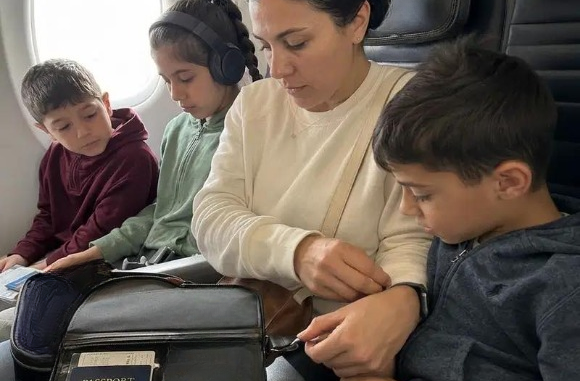
Within ten minutes, I was strapping my youngest child into an airplane seat while my two older children sat beside me in quiet shock, still holding the backpacks I had packed the night before.
Meanwhile, across town, Daniel’s family was gathered at a cheerful maternity clinic, surrounding his mistress and waiting for the sound of a heartbeat they had already decided would define their future. They were smiling, celebrating, convinced they had come out ahead—completely unaware that everything they believed was about to collapse before the appointment even ended.
I didn’t cry when the judge signed the papers. I had already done all my grieving months earlier—in the laundry room, in the car, in quiet moments where no one could see. By the time I sat in court, I was steady.
“Do you accept the terms?” the judge asked.
“Yes, Your Honor,” I replied without hesitation.
Daniel looked relieved, as if the ending meant freedom. On paper, he kept most of the assets: the house, the accounts, the business. I took the children and a modest settlement. It looked like I had lost.
His mother smiled from the back row, already convinced of it.
When the hearing ended, Daniel acted like it was a routine transaction.
“Someone will coordinate schedules with you,” he said.
“You’ll go through my attorney,” I replied calmly.
That was the first moment he realized I wasn’t negotiating anymore.
Outside, my lawyer Robert Hayes walked beside me.
“You handled that perfectly,” he said.
“I didn’t do much,” I answered.
“You did exactly what we planned,” he said. “No reaction. No mistakes.”
Then he asked quietly, “Are you sure about what comes next?”
“I am.”
That night, after the children were asleep, I had already prepared everything: passports, documents, suitcases, and every file Robert and I had spent weeks organizing. Nothing was left to chance.
At the airport the next morning, everything moved quickly. Check-in. Security. Boarding. I chose an early flight for a reason—less time for doubt, less time for Daniel to realize what had happened.
“Where are we going?” my daughter asked as the plane took off.
“Somewhere new,” I said.
As the city disappeared beneath the clouds, I didn’t feel regret. I felt distance—clean and necessary.
Because while Daniel was stepping into a clinic expecting celebration, he had no idea that the structure supporting his life was already shifting.
The agreement he signed that morning contained clauses he hadn’t fully read. The financial records he thought were secure had already been flagged and reviewed.
For once, I had moved first.
By the time we landed, my phone was already buzzing. I ignored it.
The house I had prepared was simple but steady. Not impressive—just safe. Enough for the children, enough for what came next.
When I finally checked my phone, there were multiple missed calls from Daniel—and one from a number I recognized immediately.
I called Robert.
“It’s in motion,” he said. “Accounts are frozen pending review. Discrepancies are being investigated. The settlement is no longer stable.”
I didn’t feel victorious. Just settled.
Elsewhere, Daniel’s day unraveled in a different way.
At the clinic, the ultrasound appointment shifted from celebration to uncertainty. The doctor’s questions grew more precise. The timeline didn’t align. The atmosphere changed.
Daniel stood in silence as doubt entered the room.
Then his phone rang.
By the time he finished the call, everything had changed again—financial investigations, frozen assets, and a divorce agreement that was no longer secure.
Within hours, the life he thought he had won began to collapse in layers.
That evening, he texted me:
What did you do?
I didn’t reply.
At home, the children were eating dinner. Laughing softly. Adjusting to a life that no longer felt like walking on glass.
When another message came—You think this is over?—I set the phone aside.
No, it wasn’t over. It was just beginning.
Because consequences don’t arrive all at once. They unfold.
By morning, lawyers were calling. Partners were asking questions. Accounts were under restriction. The certainty Daniel relied on was thinning.
Vanessa called too. Uncertain. Defensive. Then afraid.
“I didn’t know,” she said.
“I believe you,” I replied.
And I meant it—but it didn’t change anything.
Daniel eventually stopped calling and started sending formal requests instead. He wanted a private revision of terms.
Of course he did.
Privacy is where people try to regain control.
I declined to change anything beyond what was fair.
A few weeks later, he called again—this time not through lawyers.
His voice was different. Less sharp. Less certain.
“I thought I had everything handled,” he admitted.
“But you didn’t,” I said.
He didn’t argue.
For the first time, he asked about the children. Not the case. Not the money.
That mattered more than anything else.
“They need stability,” he said.
“They do,” I agreed.
And then I made the boundaries clear. Communication through structure. No informal arrangements. No exceptions.
He accepted.
After the call, I stood by the window while the house stayed quiet in the way peace feels unfamiliar at first.
Later, my daughter asked if I was happy.
“Yes,” I said.
And I didn’t have to think about it.
Because what remained wasn’t victory in the dramatic sense.
It was clarity.
A life no longer built around reaction—but choice.
And for the first time in a long time, that was enough.
Leave a Reply