The chandeliers of the Washington Hilton ballroom usually catch the light of champagne glasses and the polished smiles of the country’s most influential figures. But on the night of April 26, 2026, they became silent witnesses to a shock that shook the American political world. What began as laughter and speeches at the White House Correspondents’ Dinner—long mocked as a self-congratulatory gathering of media and political elites—was abruptly shattered by a sharp, mechanical sound that cut through the room.
Before the first shot, the mood outside the hotel was already tense, with protesters lining the streets while heavy security stood watch. Inside, the President sat surrounded by celebrities and media figures, unaware that the situation was about to collapse. When gunfire erupted, many guests initially hesitated, unsure if it was part of a performance or technical mishap. That confusion ended when real panic set in after a glass shattered and chaos spread through the ballroom.
What followed was a rapid descent into disorder. Cameras broadcasting the event cut to scenes of panic as Secret Service agents rushed the stage and evacuated the President with forceful urgency, knocking over furniture and scattering papers across the platform. Some guests prayed, others screamed, and many sought cover under tables as the once-formal dinner dissolved into chaos.
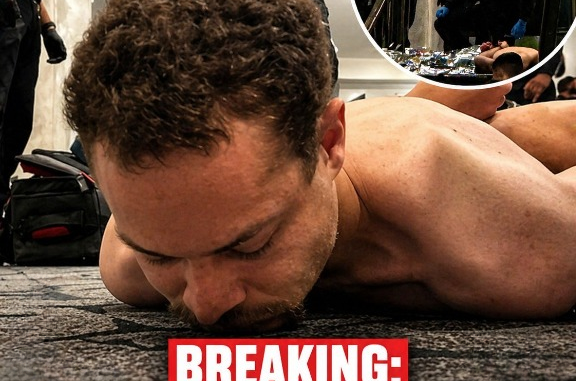
Security teams quickly converged on the source of the attack near the back of the room. The air filled with smoke and confusion as they subdued the suspect, later identified as John Revokee, a figure previously known only in obscure online spaces. He was restrained on the ballroom floor as authorities recovered weapons and tactical equipment from his possession.
As details emerged, investigators began piecing together his background, describing a troubled digital history filled with resentment toward political and media institutions. His identity and motives quickly became the focus of global attention, turning the incident into both a criminal investigation and a cultural flashpoint.
In the aftermath, the once-celebratory ballroom was transformed into a crime scene. Broken glass, abandoned plates, and discarded personal items were left behind as investigators documented the damage. What was meant to be a night celebrating journalism and politics instead became a moment of national shock and reflection.
Reactions across the country were immediate and divided. While most responded with grief and disbelief, some online communities distorted the attacker’s image into a symbol of rebellion, highlighting the growing polarization surrounding public discourse. The incident raised urgent questions about security failures, ideological extremism, and the growing instability beneath public life.
As Washington entered lockdown and officials worked to understand how the breach occurred, the event came to symbolize more than just a security failure. It became a stark reminder of how fragile even the most guarded institutions can be when confronted with escalating tension and division.
By morning, the ballroom stood empty and sealed off, its silence replacing the noise of the night before. Though the immediate threat had ended, the sense of shock lingered, leaving behind difficult questions about how such a breach was possible and what it revealed about the broader state of the nation.
Leave a Reply