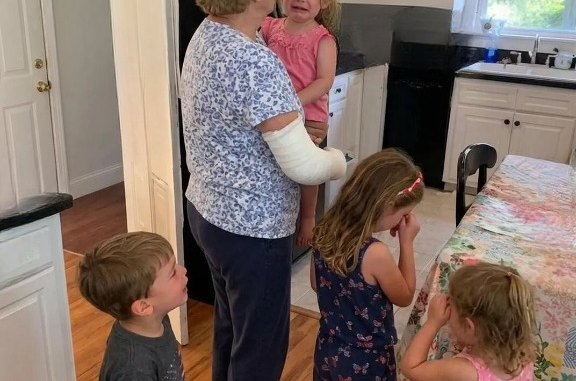
When my 68-year-old mother came to stay with us after undergoing arm surgery, my only priority was her recovery. The doctor had been very clear—she wasn’t to lift anything, do chores, or strain herself in any way for at least eight weeks. My husband, Carl, said he was glad she would be staying with us. With four children, full-time work, and our reliable nanny, Nina, handling the daily routines, I felt confident we had things under control. My mother spent her first night apologizing for being a burden, while I reassured her that her only job was to rest and heal.
The following day, everything changed when I received a call from our daughter’s daycare saying no one had come to pick her up. I rushed over immediately, only to learn that Carl had fired Nina without telling me. When I confronted him, he calmly explained that since my mother was staying with us, she could step in and help with the children instead. I was completely shocked. She had just had surgery and could barely manage basic tasks with one arm, yet he treated her recovery like an opportunity to cut costs. Worse still, he had told Nina that we were both in agreement, which was not true at all.
That evening, I came home to find my mother struggling through dinner and attempting simple chores while the children demanded attention around her. Meanwhile, Carl relaxed on the couch, seemingly unaware of the pressure he had created for someone who was supposed to be resting. Realizing this arrangement was completely unsustainable, I made the decision to move my mother and children temporarily to an extended-stay hotel. I brought Nina back, reinstated proper childcare support, and set up a plan focused entirely on my mother’s recovery. Carl was unhappy with my decision, but I needed him to understand that support should never turn into exploitation, especially when it comes to someone’s health.
In the days that followed, Carl had time to reflect on what had happened. The moment that shifted everything came when our eldest child quietly asked why Grandma had been crying while trying to fold laundry with one hand. That question made him see the situation differently. He later apologized sincerely to my mother and agreed to a new plan that restored Nina’s position, redistributed parenting responsibilities, and ensured my mother would not be expected to cook, clean, or care for the children during her healing process. When we eventually returned home, things felt different. My mother was finally able to recover peacefully, the children enjoyed her company without placing demands on her, and Carl learned a difficult but necessary lesson: caring for family means respecting their limits, not taking advantage of their kindness.
Leave a Reply