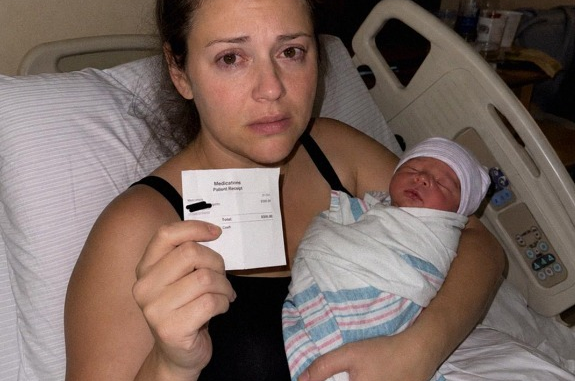
I used to believe my husband’s obsession with splitting every expense evenly was simply his way of feeling secure. But after I nearly died giving birth to our son, he handed me a receipt for the medication that helped save my life — and expected me to pay him back.
I was too exhausted and heartbroken to argue, but someone else had witnessed the entire conversation: his mother.
Three days after we came home from the hospital, she arrived at a family gathering carrying a neatly wrapped gift with a blue ribbon.
“A little something for the new dad,” she said with a calm smile.
Marcus laughed as he opened it, expecting something sentimental.
Instead, inside the frame was the $300 hospital receipt for my emergency medication.
The smile vanished from his face instantly.
Before our son Asher was born, Marcus believed every expense in our marriage should be split exactly in half. He called it “fairness.” Groceries, bills, vacations — everything was carefully tracked in spreadsheets.
At first, I tried to understand it. His system made him feel organized and in control. But after I became pregnant, things started to feel different. Maternity clothes, prenatal vitamins, even shoes for my swollen feet were treated as “my personal expenses.”
Still, I ignored the growing discomfort and convinced myself he was simply stressed about becoming a father.
Then came labor.
After more than thirty exhausting hours, complications began. Doctors rushed to stop severe bleeding, and emergency medication was administered immediately. Marcus paid the hospital balance because he happened to have his card ready.
For a brief moment, I thought the experience had changed him.
I was wrong.
On the day we were discharged, while I sat weak and sore beside our newborn son, Marcus slid the hospital receipt toward me.
“This one’s yours,” he said quietly. “It was your medical issue.”
I stared at him in disbelief.
I had just risked my life bringing our child into the world, and he was treating it like a personal expense.
What Marcus didn’t realize was that his mother, Eleanor, had overheard every word from the hallway.
She didn’t argue with him that day. She simply took the receipt, folded it carefully, and slipped it into her purse.
A few days later, at our family gathering, she revealed what she had done with it.
The framed receipt was surrounded by old photographs from her own life — images of herself exhausted and overwhelmed while raising Marcus years earlier. Beneath everything, she had added one sentence:
“A man who counts what his wife costs him has forgotten what she gave him.”
The entire room fell silent.
Marcus tried to defend himself, insisting the situation had been misunderstood, but nobody could ignore the truth anymore.
For the first time, I spoke openly about how humiliating and painful it felt to be treated like a financial transaction while recovering from childbirth.
I told him our marriage could no longer function like a business arrangement. No more spreadsheets deciding the value of care, sacrifice, or partnership.
Something finally seemed to click for Marcus that day.
Later that night, he quietly deleted the spreadsheet he had clung to for years and admitted he needed to change. It didn’t erase the hurt overnight, but it was the first genuine step toward becoming a better husband and father.
Because some things in life can be divided equally.
Love, sacrifice, and family are not among them.
Leave a Reply