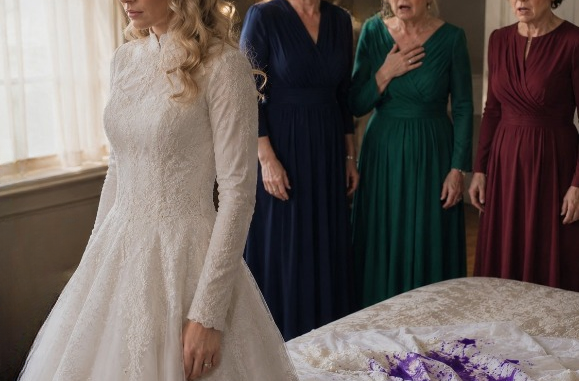
Lorie LeChance had spent most of her life tolerating her sister Brooke’s cruel remarks and her mother Catherine’s constant excuses for them. But the night before her wedding, the tension she had ignored for years finally became impossible to dismiss. Her grandmother Meline, too ill to attend the rehearsal dinner, had sent over a sealed box with a handwritten note that said, “Only open this if you truly need to.” Hoping she never would, Lorie left it untouched. Later that evening, however, she noticed Brooke lingering near the bridal suite and spotted her mother carrying a hotel keycard that wasn’t hers. Uneasy, Lorie went upstairs and discovered the suite door cracked open and the lights glowing inside. Her custom wedding dress lay across the bed, deliberately slashed beyond repair, while her grandmother’s delicate heirloom veil had also been destroyed.
Instead of breaking down, Lorie relied on the calm discipline she had developed during years as an insurance underwriter. Before letting emotion take control, she documented everything. She photographed the damaged gown and veil, preserved Brooke’s mocking text message, and immediately contacted the insurance company covering the items. With support from her maid of honor, the estate manager, and her fiancé Nathan, she gathered security footage and electronic keycard records proving Catherine had knowingly given Brooke access to the bridal suite. By the next morning, an even uglier truth surfaced: weeks before the wedding, Catherine and Brooke had exchanged emails discussing the sabotage. What they tried to dismiss as family drama was, in reality, a calculated effort to humiliate Lorie on one of the most important days of her life.
Then, just before the ceremony, Meline arrived after driving through the night from Bristol with the box she had warned Lorie about. Inside was her own 1962 wedding gown — an elegant cream-colored dress filled with family history, resilience, and love. With the help of an experienced seamstress, the dress was altered in time for the wedding. While Brooke dealt with the fallout of her actions and Catherine fled the estate in disgrace, Lorie walked down the aisle wearing her grandmother’s gown and treasured locket. Meline proudly escorted her forward, Nathan reminded her she had always deserved unconditional love, and Lorie exchanged her vows without allowing anyone else to define her happiness.
Even after the wedding ended, the consequences continued. The insurance company approved the claim and pursued repayment from Brooke, while trust and inheritance issues stripped Catherine of the control she had long used to shield her younger daughter from accountability. Lorie never received the apology many believed she deserved, but she gained something far more valuable — clarity, peace, and the freedom to stop letting others rewrite her story. Months later, she realized the destroyed wedding dress had never simply been about fabric. It represented the life her family had tried to tear apart — and the strength she found in protecting herself with truth instead of anger. From that moment on, Lorie carried one belief with confidence: she never needed to raise her voice to reclaim her power; the truth was enough.
Leave a Reply