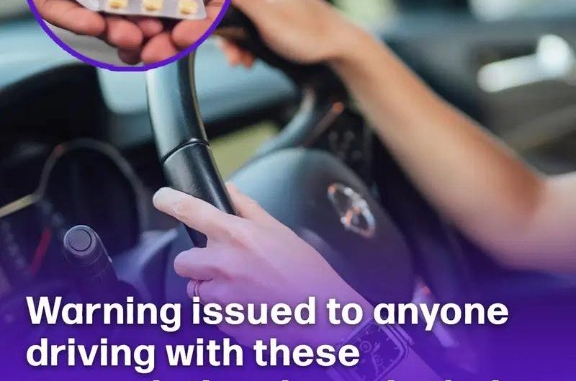
Driving under the influence of drugs can lead to serious consequences, including prison sentences and disqualification from driving, which is why it’s important to understand the rules clearly.
Authorities have issued warnings that it is illegal to drive with certain drugs in your system, even if those substances are legally prescribed by a doctor.
Drivers are expected to be fully alert and capable of concentrating at all times, and anything that reduces reaction speed or awareness can make driving unsafe.
While many people are aware of restrictions on carrying certain medications when travelling abroad, the laws around drug use and driving are often less well understood.
Similar to how you can face penalties for transporting prohibited medicines in other countries, drivers in the UK can also face legal action for breaking drug-driving laws.
In England, Scotland, and Wales, it is illegal to drive if legal drugs impair your ability to drive safely, according to official government guidance.
If you are prescribed certain medications, such as amphetamines, benzodiazepines, methadone, or opioid-based painkillers like morphine, codeine, or tramadol, you are advised to consult a doctor before driving.
However, this is not an absolute ban—these medications can still be taken while driving if used correctly and as directed by a healthcare professional, provided they do not affect your ability to drive safely.
The key issue is whether the medication impairs your judgment, attention, or reaction time, even if it is taken within prescribed limits.
If someone is found driving with drugs in their system without a prescription, they may face severe legal penalties.
In Northern Ireland, the specific legislation differs, but drivers can still be prosecuted if they are unfit to drive due to drugs.
Penalties for drug driving in the UK can include at least a one-year driving ban, unlimited fines, up to six months in prison, and a criminal record.
A conviction will also remain on your driving record for 11 years.
In cases where drug driving leads to death by careless driving, the maximum sentence can be life imprisonment.
Beyond legal consequences, there are wider impacts as well, such as higher insurance costs, potential job difficulties, and travel restrictions to certain countries like the United States.
Experts also warn that people taking strong prescription medications should avoid driving if they experience drowsiness or impaired alertness.
Safety organisations note that medication warnings can sometimes be unclear or hard to notice, which makes it especially important for individuals to seek medical advice when unsure.
Overall, the emphasis is on ensuring drivers are fit to drive at all times in order to keep roads safe for everyone.
Leave a Reply