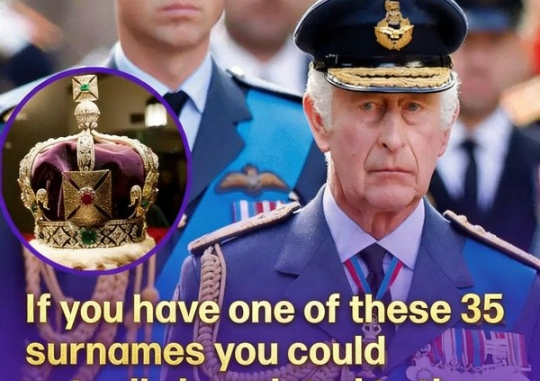
It’s an intriguing thought: could your surname be tied to kings, queens, and a long line of royal history? Genealogical research and historical records show that some surnames do have connections to royal families, though the truth is much more complicated than what viral claims often imply.
The Reality of Royal Surnames
The current British royal family uses the surname Mountbatten-Windsor, a blend of Queen Elizabeth II’s royal house name and Prince Philip’s family name.
In earlier times, however, royals didn’t consistently use surnames as we do today. Instead, they were identified by dynasties or houses such as:
- Windsor
- Tudor
- Stuart
- Plantagenet
These represent major royal lineages that ruled for centuries.
Surnames Associated With Royal Lineage
Some genealogy sources and historical accounts suggest that certain surnames are more commonly found in family trees linked to nobility or royal ancestry.
Frequently cited examples include:
- Spencer
- Howard
- Russell
- Stewart (or Stuart)
- Percy
- Cavendish
These families were often part of the aristocracy, closely connected to royal courts, or linked through marriage to royal bloodlines.
Why These Connections Are Common
Royal families historically intermarried with noble families across Europe, creating extensive and interconnected family networks over time.
Because of this:
- Many modern people may share surnames with noble families
- Some may have distant royal ancestry
- But these links are usually many generations removed
In fact, researchers note that if you go far enough back in time, a large number of people could potentially trace some connection to historical royalty.
A Name Alone Isn’t Proof
It’s important to understand that sharing a surname with a royal-associated family does not automatically mean direct descent from royalty.
Over centuries, surnames have spread widely and can now be found among millions of unrelated individuals worldwide.
Only detailed genealogical research can confirm any real royal connection.
The Appeal of Royal Heritage
The possibility of having royal ancestry continues to fascinate people because it connects identity with history, heritage, and a sense of prestige.
That’s why topics about “royal surnames” often attract attention online—they tap into curiosity about personal origins.
Conclusion
While some surnames do have historical ties to royal or noble families, the relationship is rarely straightforward.
Your last name may hint at historical connections, but uncovering true royal ancestry requires thorough family history research—not just a shared surname.
Still, it remains an interesting idea: your family tree might hold unexpected stories waiting to be discovered. 👑
Leave a Reply