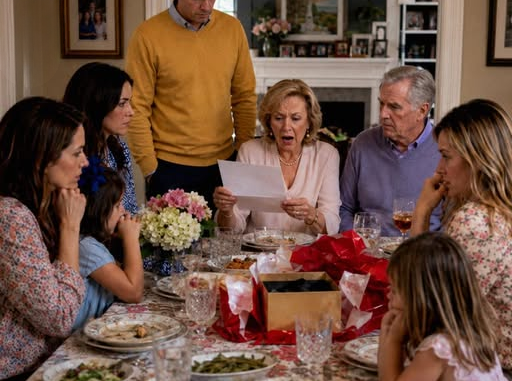
My mother-in-law spent years shaming me for being unable to have children, and when she excluded me from Mother’s Day lunch for “real mothers only,” I felt completely broken. But everything changed when my husband arrived with a DNA test that shattered the family’s beliefs about what truly makes someone a mother.
For five years, I felt like an outsider in my husband’s family because I couldn’t conceive. My mother-in-law, Beatrice, constantly reminded me of it, never missing an opportunity to make me feel inadequate.
Last Sunday morning, she called.
At first, she sounded cheerful, but then she explained she was changing the Mother’s Day lunch into an event for “real mothers only.” She claimed she didn’t want me to feel uncomfortable listening to conversations about childbirth and the “special biological bond” mothers share.
When I realized she was intentionally excluding me, I was devastated. Before hanging up, she coldly told me to enjoy a quiet afternoon at home.
I broke down in tears.
A few minutes later, my husband, Mark, came into the bedroom and immediately knew something was wrong. After I told him what his mother had said, his expression hardened. He was furious that she had once again humiliated me over my infertility.
I told him I didn’t want to face his family, but he refused to let me hide in shame. He insisted we attend the lunch together.
When we arrived at the restaurant, Beatrice looked shocked to see me. She repeated that the gathering was meant to celebrate the “sacred biological bond” between mothers and children.
That’s when Mark calmly walked to the head of the table and placed a small wrapped silver box in front of her.
“Happy Mother’s Day,” he said. “Open it.”
Beatrice smiled at first, expecting a gift. But when she opened the box, she found official DNA test results instead.
Mark told her to read the results aloud.
As she scanned the page, the color drained from her face. The report stated there was a zero percent probability that she was Mark’s biological mother.
The room fell silent.
Beatrice panicked, insisting the results had to be wrong. But Mark revealed he had tested twice.
Then Mark’s father, Arthur, finally confessed a secret he had hidden for thirty years.
Their biological baby had died shortly after birth. Unable to bear the thought of his wife waking up to that tragedy, Arthur secretly adopted an orphaned infant — Mark — and raised him as their own son without ever telling Beatrice the truth.
Beatrice was shattered. Everything she believed about motherhood, bloodlines, and biological connection suddenly collapsed.
She had spent years judging me for not being able to conceive, yet she herself was not biologically related to the son she raised and loved for decades.
Through tears, she insisted she was no longer a “real mother.”
That’s when I stepped forward.
I reminded her that biology wasn’t what made her Mark’s mother. She was the one who stayed awake with him when he was sick, comforted him, supported him, and loved him every day of his life.
Love made her his mother — not DNA.
Beatrice finally broke down completely, apologizing for the years of cruelty and judgment she had inflicted on me. For the first time, she understood exactly how painful it feels to believe you are somehow “less than.”
I forgave her.
In that moment, the toxic hierarchy built around bloodlines and biology finally crumbled, replaced by a deeper understanding of what motherhood truly means.
Leave a Reply