Stephanie stood outside her mother’s home holding a carefully wrapped birthday present, trying to believe that this visit might somehow feel different from all the others. Inside the small velvet box was a delicate gold necklace shaped like a lily, something she had spent weeks selecting in hopes of making her mother smile. From inside the house came the sounds of music, laughter, and the lively energy of a family gathering already in full swing. Her brother Mike entertained guests with ease, while her teenage nephew Tyler carried himself with the confidence of someone who had rarely faced consequences. The moment Stephanie walked through the door, she felt more like an outsider than a member of the family. Her mother greeted everyone warmly, proudly praising her son and grandson, while Stephanie quietly placed her gift among the others and tried to hide the familiar pain of being ignored.
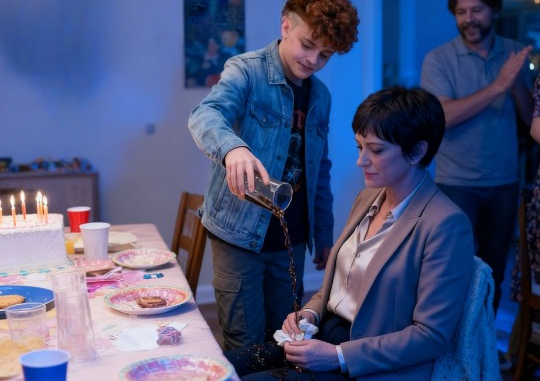
As the night went on, the atmosphere grew louder and more careless. Tyler enjoyed being the center of attention, making jokes while the adults laughed along with him. Stephanie did her best to stay composed, politely joining her mother’s birthday toast and offering heartfelt wishes despite the emotional distance she constantly felt. Then, in front of everyone, Tyler walked over holding a cup of soda and casually told her she didn’t belong there. Before she could react, he dumped the drink onto her lap while the room filled with uncomfortable laughter instead of disapproval. In that instant, something inside Stephanie changed. Rather than anger, she felt a sudden sense of clarity. She understood she had spent years trying to earn acceptance from people who had never truly valued her. Quietly excusing herself, she left the party with her dignity intact, realizing she no longer wanted her pain to control her life.
Back at her apartment above the small business she owned, Stephanie began reviewing financial records connected to her family. Over the years, she had repeatedly helped her brother with loans, leases, and other responsibilities because she believed family should support one another through difficult times. But now she clearly saw how unequal those sacrifices had become. That night, she made the painful but necessary choice to remove herself from every financial commitment tied to them. By the next morning, her brother showed up furious, accusing her of destroying their lives over what he called a harmless prank. Calmly, Stephanie explained that the issue was never the spilled soda—it was the years of disrespect, embarrassment, and emotional neglect behind it. For the first time, she chose her own peace over maintaining unhealthy family ties.
The months that followed were difficult, but they also changed her life. After facing vandalism and public criticism, Stephanie defended herself through legal action and careful recordkeeping. Unexpectedly, support began pouring in from loyal customers who admired her courage and independence. Little by little, her world became calmer, more stable, and far happier without the constant burden of trying to earn affection from people unwilling to offer it sincerely. One afternoon, she noticed her mother standing quietly outside her shop, looking through the window before eventually turning away without saying a word. Watching her leave, Stephanie finally accepted something she had avoided for years: true belonging cannot be forced. Real peace comes from respecting yourself enough to leave behind the places and people that make you feel unworthy. And for the first time in a very long time, she felt genuinely free.
Leave a Reply