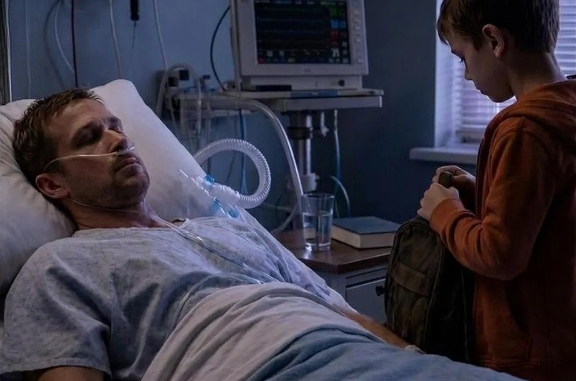
The hospital room felt like a place suspended outside of time, where the only movement came from the steady hum of machines. For two weeks, I stayed by my husband Mark’s bedside, holding his hand and speaking softly even though I wasn’t sure he could hear me. After a severe accident, he remained unresponsive, and the doctors spoke carefully about how little chance there was of recovery. Our 8-year-old son, Leo, rarely left my side, always carrying his small blue backpack as if it mattered more than anything else in the world. I assumed it was just his way of dealing with fear, unaware that it held something none of us understood yet.
When the neurologist asked to meet with me, I already knew what he was going to say. The explanation was clinical but clear—there was no meaningful neurological improvement, and continuing life support might only prolong the situation. I listened and nodded, even though it felt like I was stepping outside of myself. Even Mark’s mother agreed quietly that it might be time to let go, reminding me we also had to think about Leo. That night, the room felt even heavier, and I sat beside Mark trying to accept what everyone else seemed to have already accepted. Leo stayed unusually silent, watching everything with an intensity that unsettled me.
The next morning, with shaking hands, I signed the paperwork authorizing the machines to be turned off. We gathered for what we believed would be our final goodbye, the atmosphere filled with quiet grief. But just as the doctor moved to begin the process, Leo stepped forward and said, “No,” holding tightly to his backpack. Before anyone could react, he pulled out a small voice recorder and explained through tears that his father had made it for him. He pressed play.
The room was suddenly filled with Mark’s voice—steady, warm, and full of life. It was a message he had recorded earlier, filled with love and a simple family signal: “three squeezes means I’m here.” Leo leaned toward his father and repeated the words softly. For a moment, there was only silence. Then, barely noticeable at first, Mark’s fingers tightened slightly around mine.
Everything stopped. The doctors stepped back, and the decision was immediately reassessed. In that fragile moment, something shifted—uncertain, but real. And I understood then that while most of us had been preparing to say goodbye, our son had held on to hope just long enough for his father to answer in return.
Leave a Reply