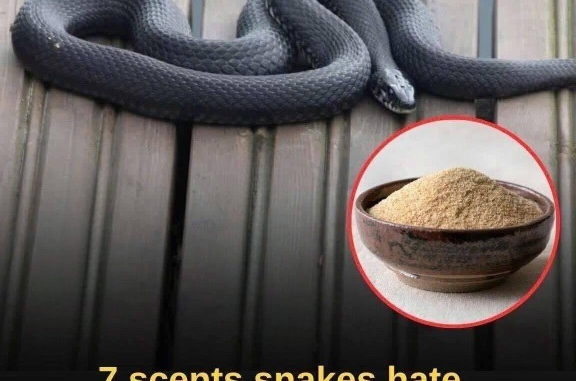
It’s often said that snakes have an extremely strong sense of smell, but it doesn’t work the same way as in humans. Instead of using their noses alone, they rely on a special organ called the Jacobson’s organ, which allows them to “taste” chemical particles in the air through tongue flicking. In a sense, their tongue acts like a sampling tool that helps them interpret their surroundings.
Because they are so sensitive to chemical signals, many people assume that strong or unpleasant odors should naturally repel them. On the surface, this seems logical—overpowering smells might make an area uncomfortable or unappealing for a snake. However, it’s not that simple. While certain scents may discourage them temporarily, there is no solid scientific evidence proving any specific smell reliably keeps snakes away.
It’s also important to understand what actually attracts snakes in the first place. They are mainly drawn to places that offer food, shelter, and suitable conditions. If a property has rodents, insects, tall grass, or hiding spots, snakes may stay regardless of any scent-based deterrents.
Because of this, prevention is far more effective when it focuses on physical environment control rather than relying on “magic smells.” Keeping grass trimmed, removing clutter like wood piles, sealing gaps around the home, and controlling pests like mice are much more reliable strategies. If venomous snakes are involved, contacting a professional is always the safest option.
Commonly mentioned scents and methods
Clove and cinnamon oil
These oils are often suggested because their strong compounds may irritate a snake’s sensory system. Some people apply diluted versions near entry points as a temporary barrier. However, they must be used carefully, as they can irritate skin and eyes and may also harm pets if misused.
Sulfur
Sulfur has long been used due to its strong odor, which is believed to drive snakes away. The downside is that it smells unpleasant for humans too and can negatively affect soil, plants, and nearby materials.
White vinegar
White vinegar is sometimes used in damp areas like patios or crawl spaces. Its strong acidity and smell may interfere with a snake’s ability to “track” its environment, but it can also damage plants and alter soil balance if overused.
Garlic and onions
Their strong sulfur-like smell is often believed to repel snakes. However, as they break down, they can attract insects and rodents—potential food sources for snakes. They are also toxic to pets, making them risky to use.
Citrus, lemongrass, and citronella
These scents are commonly used in natural pest control. While they may help reduce insects (which indirectly reduces snake attraction), their effect on snakes themselves is uncertain and temporary.
Cedar oil and cedar mulch
Cedar has a strong natural aroma and may help create a dry environment less appealing to insects and reptiles. It is also commonly used in landscaping, though it may affect beneficial insects as well.
Peppermint oil
Peppermint oil’s strong menthol scent is often thought to overwhelm a snake’s sensory system. However, it must be used cautiously, especially around pets, as it can be toxic to cats and potentially harmful to dogs.
The reality
While these scents are often discussed, none of them is guaranteed to repel snakes consistently. Results vary depending on conditions, species, and application. In some cases, they may even create risks for plants or animals.
Ultimately, scent-based methods should be seen as minor, optional additions—not primary solutions. The most effective snake prevention comes from removing what attracts them in the first place: food, shelter, and hiding spaces.
Simple maintenance—like clearing debris, controlling rodents, trimming vegetation, and sealing entry points—does far more than any spray or oil ever could. Snakes are not driven by curiosity but by survival. If a space meets their basic needs, no scent alone will keep them away for long.
Leave a Reply