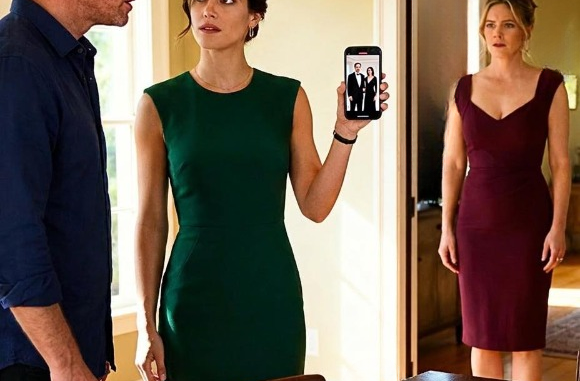
I’m Isabella Cruz, and for nearly eight months my husband Adrian had been living across town with another woman.
During that time, he ignored my calls completely. He wasn’t there when the ceiling in my home started leaking, when my mother was rushed to the hospital, or when my father’s heart condition worsened. The only message he ever sent was:
“Stop overreacting. You’ll be fine.”
Then, everything collapsed at once—my parents died in a car accident while returning from a visit to my aunt. In a single night, I lost the only two people who had ever loved me without conditions.
The following morning, my father’s attorney, Mr. Delgado, informed me that my parents had left me everything: their home, savings, a small rental property, and life insurance—worth over 25 million dollars.
I was still wearing black from the funeral when Adrian returned.
He didn’t knock. He used the key he had refused to give back and walked into my parents’ house as if he still belonged there. His clothes were rumpled, his expression cold, and the scent of another woman lingered on him. Behind him stood Vanessa—the woman he had chosen—leaning casually as though she were there for entertainment.
He dropped a folder onto the table.
“You’re going to sign this,” he said.
Inside were documents giving him access to my inheritance and the ability to sell my father’s rental property.
I simply said, “No.”
His face hardened.
For years, Adrian had trained me to stay quiet—to apologize first, to shrink myself, to avoid conflict. I used to believe keeping the peace meant staying safe. But that night, grief changed something in me.
He suddenly grabbed my hair and pulled my head back.
“You’re still my wife,” he said through his teeth. “Everything you have is mine.”
Pain shot through me as my lip hit the table. Vanessa laughed from the doorway.
“Sign it,” Adrian demanded.
I looked at him and said softly, “Touch me again, and I’ll make sure everyone knows exactly who you are.”
He laughed—so I picked up a heavy glass object from the table and struck his wrist.
He cried out in shock.
For the first time, he looked at me like I was someone he didn’t recognize.
He tried to come at me again, but I stepped away, steadying myself.
“I’m done,” I said.
He crashed into the table, shattering a vase my mother had loved.
Then I took out my phone and started recording.
When he saw it, he froze.
Outside, neighbors began gathering after hearing the noise. Mr. Collins, a retired officer, stepped forward. Mrs. Rivera moved closer, alarmed by what she saw.
I showed them my injuries. I played the recording. I explained what had happened.
Mr. Collins confirmed what he witnessed. Mrs. Rivera stood beside me in silence.
Adrian tried to claim I was the aggressor, but the evidence told a different story.
Within minutes, police arrived. When they saw the recording, the injuries, and the documents, they took him into custody despite his protests.
As he was led away, he warned me I would regret it.
But for the first time, I didn’t feel afraid.
The next morning, I sat in my parents’ home surrounded by their absence when Mr. Delgado called me in.
He handed me a letter written by my father.
In it, my parents told me they had seen how much I had endured. They had already put protections in place—trusts, legal safeguards, and instructions to ensure Adrian could never access what was mine. At the end, my father wrote one line that stayed with me:
“Don’t mistake endurance for safety.”
That became the turning point.
In the weeks that followed, I filed for divorce. With the video, witnesses, and police report, Adrian’s attempts to control the narrative fell apart. Vanessa disappeared when consequences became real. Adrian lost his job after the truth came out.
When he began calling me unstable, I released the recording publicly.
I wrote only one message:
“I stayed silent for years to keep the peace. I’m not silent anymore.”
By evening, it had spread everywhere.
Some criticized me. Many others understood exactly what it meant.
Six months later, the divorce was finalized. I kept everything my parents left me. I changed the locks, restored the house, and began rebuilding my life piece by piece.
On the first quiet Sunday after everything settled, I placed yellow roses on the table where everything had changed.
And for the first time in a long time, I felt steady.
I still grieve my parents. That loss never disappears. But I no longer confuse silence with strength, or fear with love.
Adrian returned expecting control.
Instead, he met the version of me my parents raised me to become.
And in the end, I learned something I will never forget:
Some women are quiet not because they are weak—but because they are deciding when the truth will finally be heard.
Leave a Reply