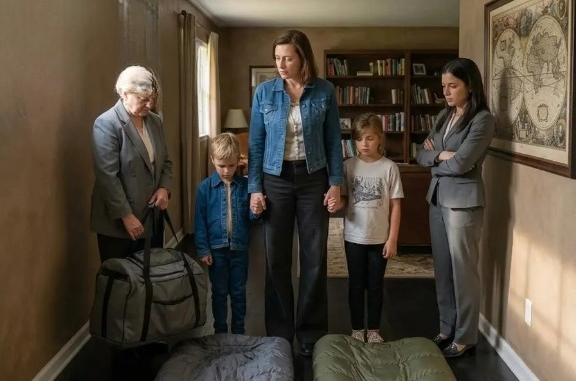
Lauren arrived at her mother’s home with her husband Ryan, their children Owen and Ellie, a homemade pumpkin pie, and an ivory tablecloth she had picked up after her mother once said she needed one. She was hoping for a warm Thanksgiving gathering, the kind she remembered from her father’s days—when the kitchen smelled of brown butter and nutmeg and everything felt calm and loving. Instead, she quickly realized something familiar: her sister Ashley and Ashley’s children had already claimed the guest room, unpacked and settled in, while Lauren’s family was once again expected to make do.
After dinner, when the children became sleepy, Lauren asked where Owen and Ellie would be staying. Her mother responded with a soft smile, pulling two old, musty sleeping bags from a closet and dropping them into the living room, calling it a fun experience for the kids. Ashley, standing nearby, suggested Lauren should have booked a hotel. Lauren noticed her six-year-old son watching her closely, absorbing a lesson she recognized from her own childhood—that some family members are prioritized while others are expected to endure.
She didn’t argue. Instead, she told her children they were leaving. Ryan understood without discussion and helped pack up. On the drive home in the rain, Lauren reflected on the years she had quietly supported her mother’s household—covering expenses like mortgage payments, repairs, insurance, renovations, and even her niece’s activities, all while Ashley received attention and approval. What she had once called duty now felt like imbalance. That night, she realized that loyalty shouldn’t require erasing herself.
The next day, she stopped all financial support. When her mother called, confused, Lauren met her and presented records showing over $124,000 she had contributed in four years. She calmly explained that she would no longer carry the family financially or allow her children to be treated as secondary. Her mother eventually thanked her, but Lauren understood the real shift had already taken place within her.
Later, at home, she bought new sleeping bags for a planned camping trip with Ryan—fresh, soft, and chosen with care. Sitting on her porch watching her children enjoy hot chocolate, she recognized that the home she needed to protect was not the one that continually drained her, but the one she was building with her own family.
Leave a Reply