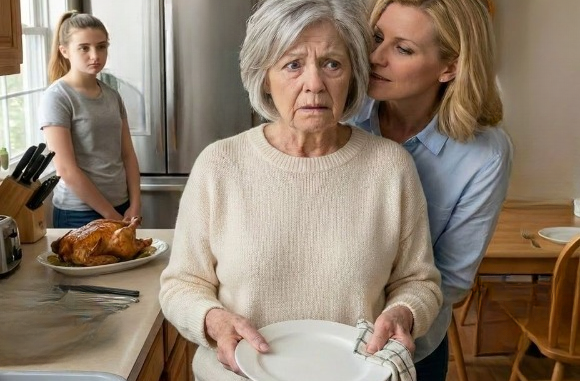
After a family dinner, while I was cleaning up in the kitchen, my daughter-in-law leaned in close and whispered that I was an “old nuisance” she only tolerated because of her husband. I laughed it off in the moment and calmly told her not to worry, because she wouldn’t have to see me anymore.
The very next day, I had the locks changed on my own home. I had been called a burden in the very place I had once opened to them, offering shelter when they had nowhere else to go.
What hurt most wasn’t the insult itself—it was the quiet, painful realization of how much of myself I had already allowed to disappear.
At 65, my mornings began early in a quiet Folsom apartment, where I often sat in silence and watched the world wake up beyond my window. After decades as an ER nurse, I had grown used to structure and control, but at home, things had slowly become chaotic in ways I could no longer ignore.
This was the same apartment George and I had built our lives in, bought in a different time when everything still felt possible. After his death, I kept going—retired, then took in my son Phillip and his family when they needed help. It was meant to be temporary.
But temporary turned into years.
Melinda, my daughter-in-law, gradually took over the space, treating my home like it was hers, while Phillip stayed silent and the children adjusted in their own ways. Skyler, my granddaughter, saw everything and often tried to stand up for me, while my grandson Jace withdrew into his own world.
What began as helping family slowly turned into losing my place in my own life.
The breaking point wasn’t one single moment—it was the accumulation of small dismissals, quiet disrespect, and being treated like I no longer mattered in the home I still paid for and had built.
After overhearing a conversation that revealed how they truly viewed me, I finally understood what had been happening all along. I was no longer being asked—I was being erased.
That realization pushed me to act.
I spoke with a lawyer, reviewed my finances, and confirmed what I already suspected: the house was still mine, and I had every right to decide what happened next. Then I made a decision I could no longer avoid.
I asked them to leave.
It wasn’t easy. There were arguments, disbelief, and emotional resistance. But I no longer stepped back from myself the way I used to.
In the end, the children chose to stay with me, and the house slowly began to feel like mine again—not just legally, but emotionally.
For the first time in years, I put on music, stood in the middle of my living room, and danced.
Not because everything was perfect, but because I had finally remembered who I was before I let myself disappear.
Leave a Reply