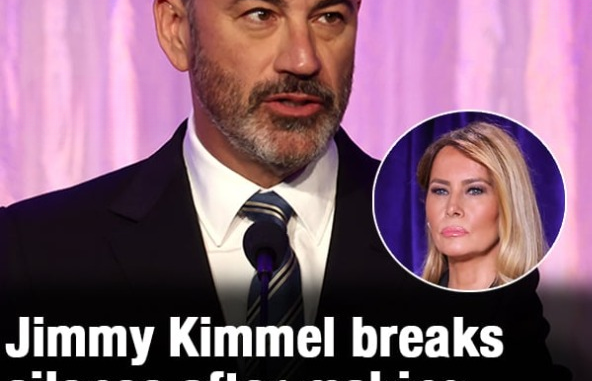
Late-night television has always been a stage for political commentary, but the latest clash between Jimmy Kimmel and the Trump family has intensified into a major controversy, pushing the limits of satire and public discourse. What started as a pointed joke during a monologue has escalated into a national debate, involving calls for Kimmel’s firing, accusations of encouraging harm, and broader questions about the role of comedy in a tense political climate.
The uproar centers on a remark in which Kimmel referred to Melania Trump as an “expectant widow.” Intended as a typical joke about the age gap between her and Donald Trump, the comment took on a more serious tone given recent security concerns surrounding the former president. Amid reports of threats and heightened risks, Trump and his allies interpreted the line not as humor, but as something far more troubling.
Donald Trump responded swiftly, using media platforms to demand Kimmel’s dismissal. He framed the joke as harmful rhetoric, accusing the network of enabling content that could endanger his family. This reaction quickly turned the situation into a high-profile standoff, drawing widespread public attention.
When Kimmel addressed the controversy, he struck a defiant but measured tone. He defended the joke as standard comedic material while emphasizing his long-standing opposition to violence. Rather than offering a full apology, he redirected the conversation, arguing that the current climate of hostility stems largely from the political style associated with Trump himself.
Public reaction has been sharply divided. Supporters of Melania Trump viewed the joke as insensitive and inappropriate, arguing that certain topics—especially those involving harm—should remain off-limits. On the other hand, Kimmel’s defenders saw the backlash as an attack on free speech and a threat to political satire, insisting that comedians must retain the freedom to challenge public figures.
Beyond the polarized responses, many observers feel uneasy about how blurred the line has become between humor and incitement. In an era marked by real-world violence and heightened tensions, even a joke can carry unintended weight, making its impact far more unpredictable.
Ultimately, this dispute reflects deeper divisions within society. It raises difficult questions about the responsibilities of entertainers and the expectations placed on public figures. As political tensions continue to rise, the incident highlights an evolving media landscape where comedy, politics, and public safety increasingly collide—and where the boundaries of acceptable discourse remain uncertain.
Leave a Reply