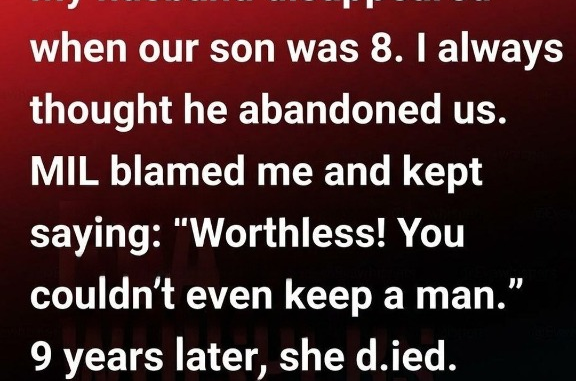
That quiet Tuesday morning is etched in my mind like a scar that never quite healed. There was no slammed door, no argument over breakfast, no dramatic goodbye. When I woke at 7:00 AM, sunlight streamed through the curtains as usual, but something in the room felt different—heavier. I reached across the bed and found only cold, undisturbed sheets. Mark was gone. At first, I thought he’d left early for work, but as I moved through the house, the truth revealed itself piece by piece. His laptop was missing. His leather jacket wasn’t by the door. Even his toothbrush had disappeared.
By midday, unease had turned into full-blown panic. His office said he’d resigned the night before via email. His friends knew nothing. My eight-year-old son, Leo, stood quietly in the hallway, clutching his toy dinosaur, sensing something was terribly wrong without needing to ask. I had no answers. For weeks, I lived in limbo, expecting a call that would explain everything—a breakdown, an emergency, something. But no explanation ever came.
The years that followed were defined by survival. Overnight, I became a single parent, juggling finances and responsibilities with relentless precision. I cut every extra expense and took on a second job, determined to give Leo stability. But the emotional strain weighed even more. My former mother-in-law, Eleanor, offered no comfort—only blame. She insisted I had pushed Mark away, that my ambition and coldness had driven him to leave. Her words made me feel responsible, as though I had caused his disappearance.
Over time, I hardened. I buried my grief under routine and necessity. Leo grew into a strong, resilient young man, though each year he resembled his father more. We built a quiet, functional life and avoided speaking about the man who had left us behind. Eventually, I convinced myself I had found a kind of peace, believing he simply didn’t want us.
Nine years later, Eleanor’s death felt like the closing of a long, painful chapter. I attended her funeral for Leo’s sake, not out of affection. The air was heavy with mist and the scent of lilies as we stood among the mourners. And then I saw him. Off to the side, beneath a willow tree, stood Mark—older, worn, but unmistakably alive.
When we faced each other, time seemed to collapse into that single moment. I expected excuses or confessions of betrayal. Instead, he told me a story of manipulation. The night he left, he had received messages—supposedly from a lawyer I’d hired—claiming I was filing a restraining order and trying to take away his parental rights. He was told that if he didn’t disappear, I would use his struggles with depression to keep him from ever seeing Leo again.
The truth hit me all at once. Eleanor had told me something entirely different—that Mark had left with another woman and started a new life elsewhere. She had blocked his calls, hidden his letters, and fed lies to both of us. She had orchestrated everything, isolating him and convincing me he had abandoned us. For nine years, she let us suffer, knowing the truth all along.
The revelation was devastating. My anger toward Mark shifted into something colder, directed at the woman we had just buried. We had both been deceived, robbed of years we could never reclaim.
When Mark finally met Leo again, I feared the worst. Leo was seventeen, with every reason to feel resentment. But when they stood face-to-face, something unexpected happened. There was no shouting, no blame—just recognition. Leo saw the pain in his father and understood that he, too, had been a victim of the same lie. They spent hours talking, slowly filling the silence that had defined their relationship.
We can’t recover the years we lost. The pain and struggle remain part of our story. But knowing the truth brought a different kind of healing. It didn’t undo the past, but it gave us a chance to move forward. We began again—not as we once were, but as who we had become. Wounded, yes, but no longer living in the shadows of someone else’s deception. Sometimes, closure isn’t about reclaiming what was lost, but realizing the strength you gained is what allows you to begin again.
Leave a Reply