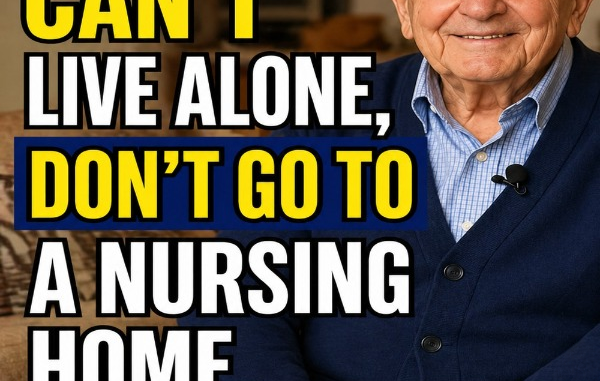
I’m 87 years old, and what I’m about to share might help others avoid a difficult mistake many people make when they begin to need help.
It’s a decision that often seems logical—even inevitable—but is sometimes made without realizing there are other options.
My name is José. About six months ago, I reached a point where I could no longer safely live on my own. I would forget my medication, leave the stove on, and once even went out for bread and couldn’t remember how to get back home.
My daughter was understandably concerned. She wanted me to move into a nursing home and had already started making arrangements. I was close to agreeing because I thought there was no other choice.
But I was mistaken.
I found a way to stay in my own home while maintaining my dignity, staying socially connected, and continuing to feel useful.
The real problem wasn’t living at home—it was living alone.
One night, as I lay awake, I realized something important: I didn’t need to move into an institution—I needed support.
And support doesn’t always have to come from costly facilities. Sometimes it comes from the people around you—neighbors, friends, and your community.
So I came up with an idea: build a small network of mutual support.
Not charity.
Not dependence.
But cooperation.
How I built my support system
The next day, I spoke to my neighbor Laura, a young mother who works from home.
I suggested something simple: I needed help remembering my medication each morning, and she could use occasional help with her children during work meetings.
So we helped each other.
Now, she stops by each morning with a coffee and makes sure I’ve taken my medication. In return, twice a week I pick up her children from school, give them a snack, and stay with them until she finishes work.
Expanding the circle
Then I talked to Pablo, another neighbor who comes home late. I asked him to check in on me each evening. In exchange, I accept his packages during the day.
I also partnered with Antonia, a widow my age. Since cleaning had become difficult for both of us, we hired a cleaner together and split the cost.
Gradually, others became part of this informal network:
- The local bar owner notices if I don’t come by in the morning
- The pharmacist reminds me when I need to renew prescriptions
- The greengrocer delivers heavier groceries once a week
The result
Six months later, everything had changed.
I stopped missing my medication.
My home stayed clean and organized.
Every evening, someone made sure I was safe.
More importantly, I regained a sense of purpose.
I had conversations, responsibilities, and people who relied on me.
I no longer felt like a burden—I felt like I belonged.
It’s not just about saving money
Yes, it costs far less than a nursing home.
But the real benefit is staying in my own home—sleeping in my own bed, surrounded by my memories, my photos, my life.
And continuing to feel useful.
Because feeling useful often matters more than comfort alone.
How you can try this approach
If you or someone you love is in a similar situation:
- Be honest about what you can no longer manage alone (medication, cleaning, cooking, transport, paperwork)
- Think about what you can still offer (companionship, childcare, cooking, small tasks, support)
- Look around—neighbors, friends, and local businesses can be part of the solution
- Suggest fair, mutual exchanges rather than asking for one-sided help
- Stay organized with a simple schedule or calendar
- Communicate openly when needs change
When professional care is needed
Of course, in some cases—serious health conditions, advanced memory loss, or high safety risks—professional care may be necessary.
This isn’t about rejecting care homes entirely.
It’s about recognizing they’re not always the only option.
The key difference
In a care facility, you might feel like just another patient.
In a supportive community, you remain a person—with value, relationships, and purpose.
And that makes all the difference.
Growing older doesn’t have to mean giving up your independence or your home. With creativity, organization, and mutual support, it’s often possible to live safely and with dignity.
Before assuming there’s no alternative, remember:
There usually is.
Leave a Reply