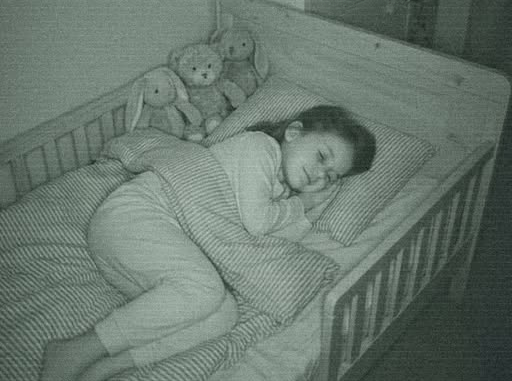
Five years ago, I lost my best friend in a tragic accident and promised at her funeral that I would raise her baby as my own. Lily became my daughter in every way that mattered, and for years our life together was peaceful. But everything changed three nights ago when she began speaking a language she had never learned — and what she said eventually led me into the attic with a flashlight and ended with police officers standing in my kitchen.
I’ve never been the type of person who believes in anything supernatural. I’m practical and grounded. I pay my bills, keep an emergency kit in the car, and when Lily has nightmares, I simply check under the bed to prove there’s nothing there.
So when the baby monitor crackled around two in the morning and I heard Lily talking in her sleep, I assumed she was just dreaming.
But as I listened more closely, I realized it wasn’t random mumbling. The sounds were structured, almost fluent, like someone speaking a real language. That realization sent a chill down my spine.
And I knew for certain she had never been exposed to another language.
I went into her room and gently woke her.
“Did you have a bad dream?” I asked.
She looked at me calmly. “No, Mom,” she said, then rolled over and went back to sleep.
I convinced myself it was nothing.
The next morning she was her cheerful self, happily eating waffles and asking if we could go to the park. When I asked if she had dreamed about anything during the night, she simply shook her head and said she didn’t remember.
I tried to dismiss the whole thing as my imagination.
But the following night it happened again. This time her voice was clearer, and it sounded even more like an actual language. The fact that it happened at almost the exact same time made it feel less like coincidence and more like a pattern.
When I woke her again, she insisted she hadn’t been dreaming.
Concerned, I contacted a child therapist. She explained that sleep talking is fairly common for children Lily’s age and that sometimes kids repeat sounds or phrases they’ve heard somewhere without remembering the source.
I wanted to believe that explanation. Still, something about the situation felt off.
So on the third night, I decided to stay in Lily’s room. I climbed into bed beside her and waited.
Right at two o’clock, she started speaking again.
This time I held up my phone and used a translation app I had downloaded earlier that day. I let it listen while she talked in her sleep.
Within seconds, the result appeared on my screen.
The language was Icelandic.
I stared at the translation, reading it twice to be sure I understood.
“My mom is alive. Go to the attic. She’s there.”
To understand why that terrified me, you need to know about Lily’s mother.
Elena had been my closest friend for fifteen years. Five years earlier she died in a brutal car crash that destroyed the vehicle and took her life. She left behind enormous debts and her six-month-old daughter.
Standing at her funeral, I silently promised that I would take care of Lily.
My husband Shawn and I adopted her not long afterward. For five years we built a loving home together, and Lily grew up calling me Mom. She only knew Elena as the smiling woman in a framed photo on the mantel.
Our family felt safe and complete.
Until that night.
Hearing Lily talk about her mother being alive in the attic made no sense. Elena was gone — I had already mourned her.
Yet there I was at two in the morning, standing in the hallway with a flashlight, staring up at the attic hatch.
We had barely used the attic since moving into the house. It was mostly storage, insulated and forgotten.
Still, I pulled the cord and lowered the ladder. A rush of cold air drifted down carrying the smell of dust — and something faintly lived-in.
I climbed up.
My flashlight moved across the attic.
There was a thin mattress in one corner, empty water bottles, food wrappers from our pantry, and a blanket I recognized from the hallway closet.
Then the beam landed on a woman hiding in the far corner.
She looked thin, pale, and terrified.
I screamed.
Before I could react, she rushed down the ladder after me with her hands raised, speaking in broken English, begging me not to scream and insisting she didn’t want to hurt anyone.
I grabbed my phone and called the police while keeping my eyes on her.
She sat on the kitchen floor where I told her to, trembling. She looked like she had been struggling for a long time — worn clothes, cracked hands, and the exhaustion of someone who had endured far too many hard nights.
After calling the dispatcher, I phoned Shawn, who was away on a work trip. The moment he heard my voice, he said he was heading home immediately.
The police arrived within ten minutes.
During questioning, the woman explained that she had been homeless for more than a year. A few days earlier she had walked past our house and seen Lily playing alone in the yard with her stuffed bear.
She approached her carefully.
Lily, trusting and only six years old, ended up telling the woman something she hadn’t told anyone else.
She had overheard Shawn and me discussing whether we should wait before telling her she was adopted.
The officer glanced at me when the woman revealed this.
I felt numb.
Lily had been carrying that worry alone, believing she was different from us and wondering about her real mother.
The woman saw an opportunity.
She told Lily that she could help her speak with her mother’s spirit.
From her pocket she took a cheap glass orb, the kind sold at flea markets, and pretended it was a magical tool.
The woman happened to speak Icelandic — the language she grew up with. She taught Lily a few phrases and told her that repeating them would help her communicate with her mother.
Then she asked whether the house had an attic.
When Lily said yes and explained that no one ever went up there, the woman created a story that Elena’s spirit was waiting there and wanted to meet the kind lady who would help them talk.
Finally, she told Lily that the ritual required something important: Lily had to secretly let her inside the house.
And Lily did.
The little girl opened the back door.
The woman planned to stay only one night.
Instead, she hid in our attic for nearly a week — sneaking food from our kitchen after midnight, using the bathroom while we slept, and climbing back upstairs before anyone woke.
None of us noticed.
The police arrested her for trespassing and manipulating a child. She didn’t fight them as they led her away in handcuffs.
A few hours later, Shawn arrived home and held Lily for a long time without saying a word.
The next day we installed security cameras, changed locks, and sealed the attic properly.
But the most important conversation happened that evening when I sat beside Lily on her bed.
I explained that Elena had been her birth mother and my best friend, and that she loved Lily deeply before she died.
Lily listened quietly and then asked, “So that means two moms loved me?”
“Yes,” I told her. “You’re doubly loved.”
Shawn joined us and promised that from now on there would be no secrets in our family.
It has been three nights since everything happened.
I was never afraid of ghosts.
What frightened me far more was realizing that my daughter had felt lonely enough to trust a stranger with a question she didn’t feel comfortable asking us.
The woman in the attic was desperate and manipulative, and she will face consequences.
But the real problem began much earlier — in a quiet conversation between two adults who forgot that children hear more than we think.
We thought we were protecting Lily by keeping things from her.
Instead, we taught her to carry those worries alone.
That ends now.
Leave a Reply