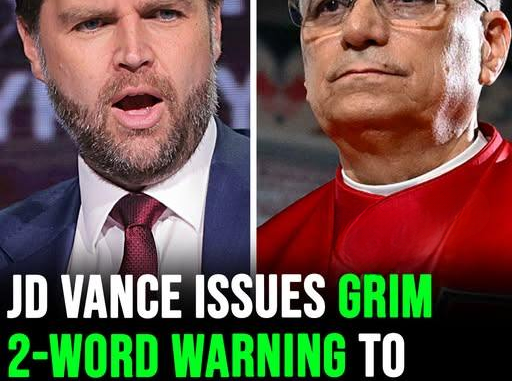
The warning struck with sudden force. A sitting vice president, JD Vance, publicly urged Pope Leo XIV to “be careful” when addressing theology, setting off a confrontation between political authority and religious leadership.
In just a few days, the situation escalated into a global spectacle. The White House and the Vatican appeared to be in direct opposition, with allies aligning on different sides and old divisions coming back into focus.
At its core, the conflict raises a fundamental question: in times of crisis, who shapes moral judgment — political leaders or spiritual figures? The world looked on as this tension played out.
The dispute began when Pope Leo XIV denounced attacks on civilian infrastructure, speaking from a moral standpoint and criticizing what he described as a disregard for human life driven by power and self-interest.
While the Vatican presented his remarks as a humanitarian concern, the White House interpreted them as a direct challenge to its stance and authority, responding quickly and defensively.
Donald Trump rejected the Pope’s comments as politically motivated, a reaction that sparked concern internationally, with even some allies signaling unease at the tone.
Vance further escalated tensions by calling on the Pope to avoid political involvement, framing the disagreement as necessary and pointing to historical precedents that prioritize state interests over moral criticism.
What started as a disagreement has expanded into a wider moral divide. As tensions continue to grow, the key issue remains whether compassion will still influence decisions — or whether power alone will determine the path forward.
Leave a Reply