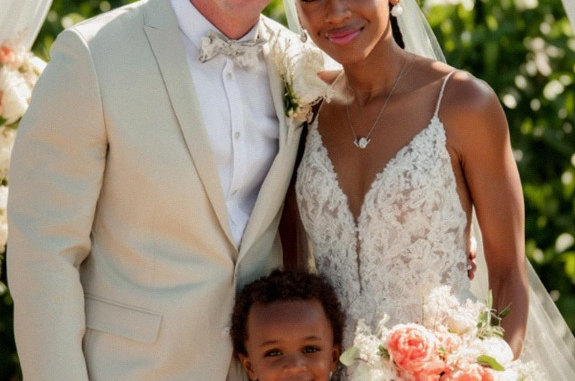
When Jonathan chose love over legacy, his mother walked away, leaving no room for compromise. Three years later, she returned with judgment in her eyes and no apology on her lips. But what she discovered behind his front door wasn’t at all what she expected.
My mother never cried when my father left. She didn’t shed a tear when he slammed the door or when she pulled their wedding photo from the frame and dropped it into the fireplace. She simply turned to me.
I was five, already learning the quiet resilience she demanded, and she smiled coldly.
“Now it’s just us, Jonathan. And we don’t fall apart, son.”
That was her standard. Her love was never soft—it was precise, efficient, strategic.
I was grateful for the education she provided, the piano lessons, the etiquette she drilled into me. She taught me to maintain eye contact, perfect posture, and write thank-you notes—but never to be happy. She raised me to be bulletproof.
By the time I turned twenty-seven, I’d stopped trying to impress her. There was no impressing her. Every achievement simply raised her expectations. But I still told her about the person I loved.
We met at one of her favorite restaurants. Dark wood furniture, starched linen napkins folded like origami. She wore navy, her armor when she wanted to be taken seriously, and ordered wine before I even sat down.
“So?” she asked, tilting her head. “Is this a real-life update, Jonathan, or are we just catching up?”
“I’m seeing someone, Mom.”
Her smile was sharp, inquisitive.
“Anna is a nurse. She works nights at a clinic.”
She blinked, a flicker of approval in her gaze. “Smart. Brave. Good qualities in a woman for you. Parents?”
“She’s got both, but they live out of state.”
“Wonderful!” she exclaimed. Then I added, “She’s also a single mom. Her son, Aaron, is seven.”
Her pause was imperceptible. She sipped her wine, composed herself, and replied, cool and polite: “That’s a lot of responsibility for someone your age.”
I defended her gently, explaining Anna was incredible, a devoted mother, and Aaron was a bright, loving child. She nodded curtly, offering nothing more. “A good man is hard to find,” she said.
We spoke of work, art, the weather. Anna’s name never came up again, and I didn’t push it.
Weeks later, I brought Anna and Aaron to meet her at a small coffee shop near my apartment. Anna was late, flustered, and Aaron clinging to her hand. My mother greeted them politely, but without warmth. She asked Aaron one question—his favorite school subject—and then ignored him. She paid for herself, leaving the impression clear.
“She doesn’t like me, Jon,” Anna whispered afterward.
“She doesn’t know you yet, love.”
Two years passed. I met my mother at the piano showroom uptown, where she once took me as a child to “imagine legacy.”
“So, Jonathan,” she asked, running her hand along a grand piano, “is this going somewhere, or are we just wasting time?”
“I asked Anna to marry me,” I said.
She froze, hand midair. “If you marry her, don’t ever ask me for anything again. You’re choosing that life.”
And that was it. No hesitation, no emotion. She let me go.
A few months later, we married. Our home was modest, imperfect, alive with laughter. Sticky drawers, a lemon tree, mismatched mugs, green handprints on Aaron’s walls. Anna worked nights. I handled meals, school runs, weekend cartoons. I cried over laundry one night, feeling grief and joy coexisting.
Three years of silence passed, then my mother called.
“So this is really the life you chose, Jonathan.”
“Yes, Mom,” I said.
“I’m back in town. I want to see what you’ve given up for this life.”
Anna didn’t bat an eye. “She’ll twist it however she wants,” I said.
I cleaned, but I didn’t stage anything. The magnet-covered fridge, scuffed coffee table, and crayon marks remained.
When she arrived, poised and polished, she didn’t greet us. She walked through the living room, hand on the doorframe, eyes scanning every imperfection. Then she froze.
Aaron played a hesitant Chopin melody on the old piano—the same she had drilled into me as a child.
“Where did he learn that?” she asked quietly.
“He asked. I taught him,” I said.
Aaron handed her a drawing: our family on the front porch, her in the upstairs window surrounded by flowers.
“I made you something,” he said.
Her jaw tightened. She blinked, silent.
We sat together. Anna served tea and banana bread. Warmth filled the room. My mother barely touched her cup.
“You could have been someone great, Jonathan,” she said.
“I am someone. I just stopped performing for you,” I replied. “You lost us anyway because you never gave us a choice.”
For the first time, she looked at me without trying to fix anything.
Anna finally spoke: “Jonathan chose us. We’re not a punishment, and you don’t have to be the villain—unless you choose to be.”
Half an hour later, she left. No hug. No apology.
That night, the phone rang. Her voice trembled. “I didn’t know it would feel like this… Your home, your son… the way your wife trusts you…”
Sobs broke through.
“No,” she said finally. “I just needed you to know I saw it.”
The next morning, an envelope appeared under the doormat: a music store gift card and a small note in her precise handwriting.
“For Aaron. Let him play because he wants to.”
I stood in the doorway, holding the note, the light washing over the floor. For the first time in years, nothing felt broken. Perhaps this was not closure—not yet—but the beginning of something new.
Leave a Reply