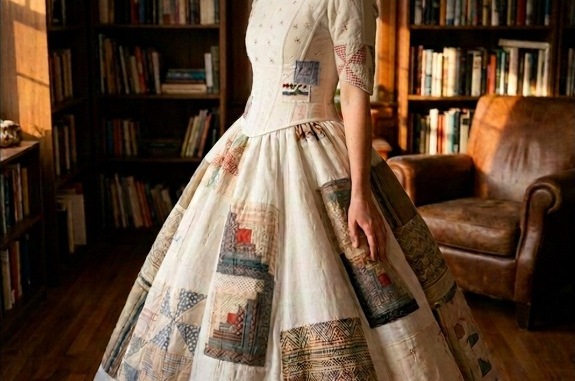
My mother raised me on her own, and though we didn’t have much, she made our little world feel safe and warm. She worked long, exhausting hours at a diner but still found time to laugh with me and make our home feel full of love. One particularly harsh winter, when the cold seeped through the walls and heating bills were impossible to manage, she began cutting up old clothes. Night after night, she stitched the pieces together into a thick, colorful quilt. She told me each piece “knew us,” carrying memories of moments we had shared. That quilt kept us warm during the bitter months, but more than that, it became a symbol of her love, resilience, and determination to protect me no matter how hard life got.
As the years passed, life slowly improved. I finished school, built a career, and eventually fell in love with a wonderful man named Colin. When he proposed, my mother was overjoyed and promised she would be by my side on my wedding day. Tragically, she fell seriously ill and passed away before the wedding could happen. In the quiet weeks after her loss, I went to her house to sort through her belongings. On a shelf, I found the quilt folded neatly. Memories rushed back, and I realized I wanted to carry a part of her with me down the aisle. With the help of a skilled seamstress, I transformed the quilt into my wedding skirt. When I tried it on, I felt my mother beside me, proud and smiling.
Not everyone felt the same way about the skirt. My future mother-in-law, Linda, was focused on appearances and social impressions. When she saw it during a fitting, she dismissed it as inappropriate for a formal wedding. I calmly explained that it was my mother’s quilt and that wearing it was my way of honoring her. My fiancé supported me, but Linda’s disapproval lingered. On the morning of the wedding, just hours before the ceremony, I discovered the skirt had been badly damaged—torn, seams pulled apart, and stained. Moments later, Linda appeared and admitted she had destroyed it, claiming it would embarrass the family.
Rather than letting anger take over, I chose to let the truth shine. During the ceremony, I walked down the aisle in the damaged skirt and shared its story with our guests—how my mother had made it in a difficult winter and how it symbolized love, sacrifice, and resilience. The room went silent as everyone understood its significance. When Linda’s actions came to light, my fiancé stood beside me, making it clear that respect and kindness mattered more than appearances. In that moment, the torn quilt became more than a piece of fabric—it became a testament to my mother’s love and strength. Though damaged, it remained a powerful reminder that love endures, carrying me forward into this new chapter of life.
Leave a Reply