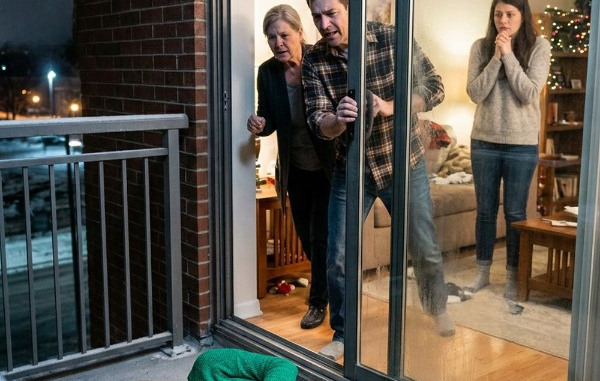
I was six months pregnant when my sister-in-law locked me out on the balcony in freezing weather and told me, “Maybe a little suffering will toughen you up.” I pounded on the glass until my hands went numb, begging her to let me back inside. By the time someone finally opened the door, I had collapsed on the floor. What happened afterward in the hospital left the entire family shaken.
I was 28 weeks pregnant when Melissa shut me out on the balcony.
From the start, she never liked me. Every interaction came with criticism—my cooking, my appearance, my voice, even the way I carried myself. When I became pregnant, her attitude only worsened. She called me lazy, dramatic, and accused me of exaggerating every symptom for attention. My husband, Ryan, acknowledged she could be harsh, but always dismissed it as “just how she is.”
That Thanksgiving, his family gathered at our apartment. I spent the entire day cooking despite exhaustion, back pain, and swollen feet. When Melissa arrived late, she looked over everything I had prepared and smirked.
She made cutting remarks at dinner, but I tried to stay quiet. Afterward, while I was cleaning in the kitchen, she followed me in and continued to belittle me. To avoid conflict, I stepped onto the balcony to grab something from outside.
That’s when she closed the door behind me—and locked it.
At first, I thought it was a mistake. Then I saw her standing inside, arms folded, watching me through the glass.
“Open the door!” I shouted.
She only said, “Maybe some discomfort will teach you to stop being so weak,” before walking away.
The cold hit instantly. I knocked, begged, and screamed for Ryan, but the noise inside drowned me out. Minutes dragged on. My fingers went numb, then my legs. Fear set in as cramps tightened in my abdomen.
Eventually, someone noticed. Ryan’s mother rushed over, realizing something was wrong, and the door was forced open. But by then, I could barely stand.
Ryan caught me as I collapsed.
Then we saw it—blood.
Panic erupted. An ambulance was called immediately, and I was rushed to the hospital.
Doctors quickly determined I was in signs of preterm labor. The medical team worked urgently to stabilize me and protect the baby, administering medication and steroids in case of early delivery.
Ryan stayed beside me the entire time, shaken and remorseful. For the first time, he fully confronted what had been happening with his sister and what he had ignored for years.
By morning, the contractions had slowed enough for cautious relief. I was admitted for observation, and eventually told the baby was stable.
When Melissa tried to visit, Ryan stopped her in the hallway. I didn’t hear every word, but I heard enough—he made it clear her actions had caused real harm, not a misunderstanding. She was told to leave and not come back.
Later, he told me he had reported what happened to hospital staff as well.
Our daughter, Lily, was born six weeks early but healthy after a brief NICU stay. Holding her for the first time changed everything for me. I promised myself then that anyone who put her at risk would never have access to her again.
Melissa’s apologies came later—messages, calls, explanations—but none of it could undo what happened. Some actions have consequences that words can’t fix.
And if there’s one thing I learned, it’s this: being family is never an excuse for cruelty, and boundaries aren’t optional when safety is on the line.
Leave a Reply