For three years, I quietly worked toward a dream. I saved carefully, gave up small comforts, and planned a family trip to Hawaii as a gift—not just for my son, his wife, and the children, but also as a tribute to my late husband’s memory. I pictured peaceful evenings by the ocean, shared meals filled with stories, and my grandchildren learning about the man who had once brought me to those same shores with nothing but love. Every detail was intentional: the villa, the flights, the excursions, even the small welcome gifts I wrapped by hand. To me, it was never just a vacation—it was meant to be a moment of closeness, a reminder that family is built on memory as much as presence.
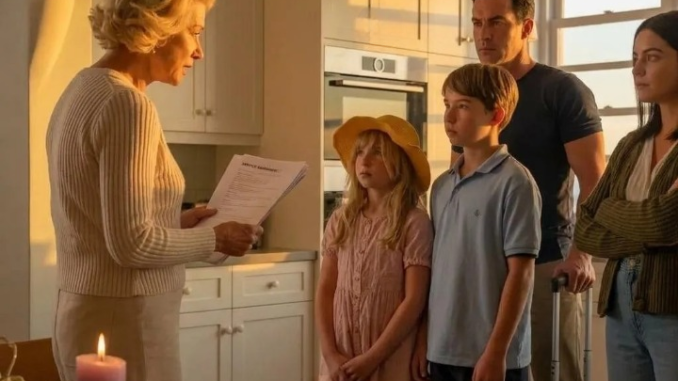
Then, just days before we were meant to leave, a message from my son changed everything. It was short, direct, and impossible to misunderstand. I was told I would not be coming, that the trip would be “just for her family,” as if I no longer belonged to the very story I had helped shape. At first, I just sat there in silence, surrounded by packed bags and labeled gifts, struggling to understand how something so rooted in love could be reduced to convenience. But as the shock faded, clarity took its place. I checked the bookings and realized everything—every reservation, every payment—was tied to the account I had funded alone. I hadn’t been forgotten. I had been deliberately excluded while still being expected to pay.
What followed wasn’t anger, but a quiet decision to reclaim my dignity. I froze the travel funds and stopped the payments before the trip could continue on my generosity alone. While they carried on expecting everything to remain unchanged, I chose not to argue, explain, or beg. Some truths don’t need to be spoken—they become clear when support is removed. In that silence, I began to think differently. Instead of giving everything to people who had mistaken my care for obligation, I thought of other women I knew—women who had spent years giving, enduring, and quietly being overlooked. Women who deserved rest, beauty, and inclusion without conditions.
So I created a different kind of journey—one rooted not in entitlement, but in appreciation. I invited a small group of women whose lives had been shaped by resilience and quiet sacrifice, and together we traveled to the place I had once hoped to share with family. There, under the open sky and beside the ocean, we spoke about memory, grief, strength, and what it means to be truly seen. My husband’s photo still rested at the center of the table, but I finally understood something I hadn’t before: family is not only defined by blood, but by those who value your presence. I didn’t lose a vacation. I gained clarity—that love without respect becomes obligation, and that sometimes the most meaningful journey begins when you stop waiting to be chosen and start choosing yourself.
Leave a Reply