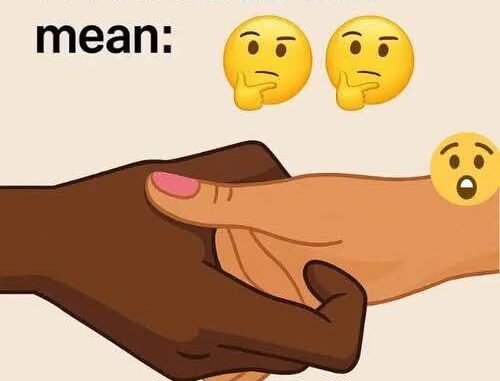
The human palm is one of the most sensitive areas of the body, packed with nerve endings that send detailed sensory signals to the brain. Because of this, any contact with the palm tends to feel more personal than a touch on other parts of the body, such as the arm or shoulder. When someone goes beyond a simple handshake and intentionally scratches the palm of another person’s hand, the action can take on a different level of meaning. While it may appear subtle or insignificant, some body language interpretations suggest it is rarely random and often carries intent.
In social and romantic contexts, a palm scratch is sometimes viewed as a hidden signal of attraction. Unlike a standard handshake, which is meant to be neutral and professional, this kind of touch introduces unexpected intimacy. It can serve as a quiet way of testing boundaries or observing how the other person reacts to closer physical contact. Because the palm is so sensitive, the sensation can create a brief, private moment that communicates interest without words.
The nature of the gesture also depends on how it is done. A slow or lingering scratch during a handshake or hand-holding is often seen as flirtatious, suggesting an interest that goes beyond casual interaction. A quick or unintentional-feeling motion may be less deliberate, but some interpret it as still reflecting underlying attraction or awareness. In this sense, the gesture can turn an ordinary greeting into something more suggestive and personal.
However, meaning depends heavily on context. Between people who already share a romantic connection, it may be a playful or affectionate signal. But between strangers, colleagues, or acquaintances, it can feel intrusive or inappropriate, since it crosses normal boundaries of physical interaction. Because of the palm’s sensitivity, unwanted contact can easily be perceived as uncomfortable rather than charming.
Ultimately, how the gesture is interpreted comes down to the recipient’s comfort and perception. Even if the intention is flirtatious, the most important factor is how it is received. If it feels unwelcome, that reaction itself defines the boundary that has been crossed.
Understanding body language involves paying attention to these small but meaningful actions. Whether seen as a subtle sign of interest or an overstep, a palm scratch during a handshake is an example of how non-verbal cues can carry complex and varied interpretations depending on context and perception.
Leave a Reply