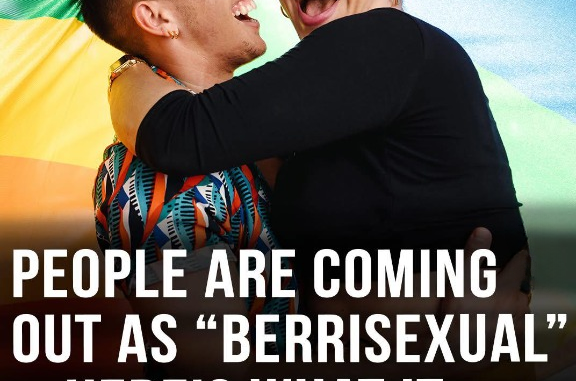
In the quieter, neon-glowing spaces of the internet, a subtle linguistic shift is emerging—one that finally gives a name to a feeling many people have long struggled to describe. For some, labels like bisexual or pansexual never quite fit, like clothing that almost works but never feels fully right. Their experiences of attraction existed in gray areas, often leaving them feeling as though they weren’t “getting it right” because their feelings didn’t divide neatly or evenly. Now, a gentle new term is reshaping that understanding: Berrisexuality.
Rather than being just another trendy label, Berrisexuality offers a sense of recognition and relief to those who identify with it. It describes attraction that is open to all genders but naturally leans more strongly toward women, feminine, or androgynous individuals. Attraction to men or masculine-presenting people is still present, but it tends to be less frequent or less central. For years, many people felt pressure to “balance” these feelings or questioned themselves for not fitting a more equal definition of attraction.
As the term spreads across platforms like Reddit, Discord, and queer-focused communities, many are experiencing a moment of clarity—realizing they weren’t mistaken or “doing it wrong” all along. In a world that often pushes people into strict categories, having language that reflects nuance and preference can feel empowering. It creates space for those who may have felt caught between identities, not fully seen in either.
Importantly, Berrisexuality doesn’t aim to replace broader identities like bisexuality. Instead, it adds detail and precision, helping people better describe their unique experiences. It acknowledges that attraction isn’t always evenly split and that having a stronger pull in one direction doesn’t invalidate other aspects of one’s identity. In many ways, it acts as a more focused lens for something that was always there but harder to articulate.
The growing popularity of this term highlights how meaningful language can be. While some critique the rise of more specific identity labels, others see it as a path to deeper understanding and belonging. For those embracing Berrisexuality, it’s not about standing out—it’s about finally feeling accurately represented. It reflects the reality that attraction is complex, fluid, and rarely symmetrical.
As this idea moves from niche online spaces into wider awareness, it carries a reassuring message: it’s okay to experience attraction in a way that isn’t simple or evenly defined. It affirms that people don’t need to justify or reshape their feelings to fit expectations. In a world that often demands clarity and simplicity, Berrisexuality offers something different—a way to honor the natural “lean” in one’s identity without apology.
Leave a Reply