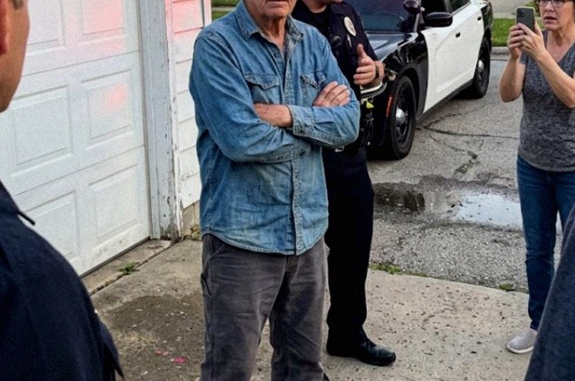
The morning my neighbors reported my 72-year-old father, they were convinced he’d been taking in dogs and secretly “getting rid of them” for money. The whole street gathered to watch. But when the garage door finally opened, no one was prepared for what they saw inside.
I’m Pete, 42, married with two kids, living about three hours away. Every so often, I return to my hometown to spend a few days with my dad. He’s lived alone ever since my mom passed away 26 years ago—never remarried, never moved, and never even replaced the faded yellow curtains she once chose.
I always told myself he was doing fine. Maybe I needed to believe that.
Dad was constantly busy—up before sunrise, working, helping neighbors who barely thanked him. But one place was always off-limits: the garage.
As a kid, I’d sometimes hear dogs barking from inside, only for it to suddenly go quiet. Dad would come out smelling of sawdust and shampoo and tell me, “Leave it alone, Pete.” And I did—partly out of obedience, partly out of fear.
After being chased by dogs when I was young, I developed a lasting unease around them. So I made a rule for myself: don’t go near the garage, don’t ask questions. That rule followed me into adulthood.
Whenever I visited, I’d notice Dad slipping into the garage with supplies—food, blankets, tools. I’d hear faint sounds of claws on concrete or bowls moving, but by evening, everything would be silent again. Still, I never asked where the dogs came from or where they went.
Then one Thursday morning, shouting broke the routine.
“Walter, open the garage! We know what you’ve been doing!”
Neighbors had gathered outside, some even recording. A patrol car was parked nearby, and two officers stood at the gate. They explained that complaints had been made—people believed Dad was taking dogs in and making them disappear, possibly for money.
For the first time, doubt crept into my mind. I barely knew what went on behind that door.
The officers presented a warrant, and Dad calmly walked to the garage, keys in hand. “All right,” he said. “Watch closely.”
The door began to rise.
What waited inside stopped everyone cold.
There were no cages, no mess—nothing cruel or suspicious. Instead, there were carefully built wooden sleeping spaces, each one clean, smooth, and comfortable. Every spot had blankets, food and water bowls, and even a small framed photo. Names and dates were painted above each space.
At the back, a board displayed dozens of dog photos—old, overlooked animals—with notes written beneath them: how long they’d waited, whether they’d been adopted, or if they’d simply stayed until the end.
It didn’t feel like a garage. It felt like a place of care and dignity.
“These aren’t missing dogs,” one officer whispered.
Dad spoke simply: “Nobody wanted the old ones.”
Then he added, “I wasn’t going to let them be alone at the end.”
On a nearby shelf were collars, toys, and keepsakes—each labeled and preserved. There were notebooks too, filled with daily notes about each dog: what they ate, what comforted them, how he stayed with them through their final nights.
He had been doing this for decades—quietly caring for animals no one else chose.
I asked him why he never told me.
“It wasn’t something to talk about,” he said.
The officers’ tone shifted completely. There was no suspicion left—only respect. When asked about money, Dad clarified he paid fees to shelters to take in the dogs.
Outside, the accusing neighbors fell silent, their certainty replaced with shame. One by one, they apologized. Dad simply acknowledged them without anger.
In the far corner of the garage, I found one empty space. Above it was a photo—not of a dog, but of my mother.
“After she passed,” Dad said quietly, “the house got too quiet.”
That was all he needed to explain.
He had spent years giving comfort to forgotten animals, making sure none of them faced the end alone.
I apologized—for never asking, for keeping my distance.
“You were a kid,” he said gently.
“I’m not anymore,” I replied.
And I meant it.
The next day, I stayed. I started helping—bringing tools, making plans, offering to share the responsibility. Dad had carried it alone long enough.
As I stood in that garage, reading names and stories, one truth became clear:
The dogs were never disappearing.
They were being loved.
Leave a Reply