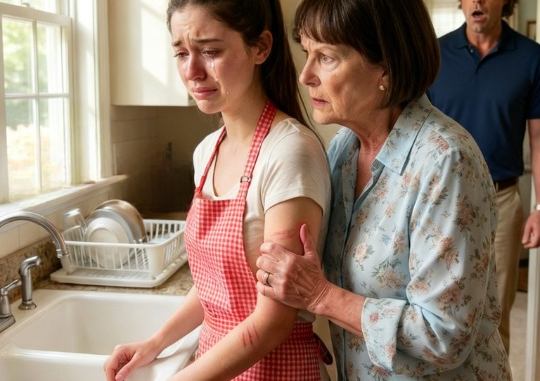
I used to think my wife was just clumsy—always brushing off the bruises on her wrists with, “I bumped into something, it’s nothing.” Then one afternoon, the kitchen camera showed my mother pressing down on her wrist and whispering, “Don’t let my son find out.” I watched it three times. What made my blood run cold wasn’t just that moment—it was how Ava didn’t even flinch. She’d been through this before.
For years, I had ignored the signs. Every faint mark had an explanation: she bumped a counter, slipped carrying groceries, or hit a cabinet. Nothing seemed dramatic enough to demand the truth.
The camera changed everything. At 2:17 p.m., a motion alert from work revealed Ava at the sink, shoulders tense, head slightly bowed. Behind her, my mother gripped her wrist hard enough to make her body jerk and whispered, “Don’t let my son find out.”
I replayed the footage three times. Each time, my stomach sank further. Ava didn’t recoil; she didn’t scream. She just closed her eyes, bracing herself. It wasn’t a single act—it was part of a pattern.
I checked the archive. More clips showed my mother pinching, grabbing, or blocking Ava quietly, always ensuring no one else would see. Ava’s silence was survival, a way to navigate years of abuse.
When I came home, I found them in the kitchen. Ava’s arm was hidden. My mother acted casual, sipping coffee, as if nothing had happened. I ignored her and said, “Show me your wrist.” Ava hesitated, then revealed darkening finger marks. My mother tried to brush it off, but I played the clip on my phone. Her voice, clear and unmistakable: “Don’t let my son find out.”
Ava whispered, “Because she’ll twist it.”
Piece by piece, the story came out: criticism, control, small deniable physical abuse. All orchestrated under the assumption I’d never see.
I told my mother to leave. Immediately. She protested, but Ava’s fear and the evidence left no room for negotiation. My sister arrived, corroborated the pattern from her own childhood, and helped ensure my mother left for good.
Recovery wasn’t instant. Ava had to relearn ordinary life: cooking without criticism, leaving dishes in the sink without guilt, sitting in quiet without tension. I changed the locks, documented injuries, and created safety.
Months later, I watched her at the counter, sleeves rolled up, free from bruises and fear. The quiet felt almost unreal—ordinary peace, something we had never truly known.
What haunts me isn’t my mother’s hand or her words. It’s that, for so long, she was right—I wasn’t paying attention.
If the truth about your own family was right in front of you, on a screen, could you find the courage to stop explaining it away and finally protect the person who needed you most?
Leave a Reply