“Morgan’s covering my $2,800 rent and the new van payments now that I quit today,” Courtney said between bites of Caesar salad, as casually as if she were announcing tomorrow’s weather.
She didn’t even glance at me, smiling instead at Grandma Sheila, perched at the table with a glass of boxed wine, and at Travis, her perpetually unemployed boyfriend, who was busy shoving garlic bread into his mouth like it was a sport.
“Family supports family, right?” she added, sugar-sweet and loud.
Grandma, already halfway tipsy, nodded. “Of course. That’s what we do.”
Travis snorted. “Yeah, Morg’s got it. She’s always fine.”
They laughed, treating my “being fine” as some quirky trait. Nobody noticed my fork hanging midair. I didn’t argue. I didn’t explode. I swallowed hard and slid my chair back.
“Excuse me,” I murmured.
Courtney had already moved on to explaining how unbearable work and the kids were. She hadn’t mentioned the number yet. This would be her sixth child.
I retreated down the hallway past peeling photos and the eternally freezing thermostat, slipping into the converted pantry they called my room.
No vent, just a too-small mattress squeezed between bare shelves and a single tiny window facing a brick wall. Summer turned it into a toaster oven; winter, a freezer. “Bedroom” was a generous label.
I locked the door behind me with a chair jammed under the knob—hollow defense, but a line nonetheless.
I’m Morgan. Twenty-six. Quiet, responsible, the family’s emergency fund in yoga pants. They think I scrape by on some meaningless data entry job. They don’t know I’m a senior systems analyst with a six-figure salary, funneling seventy percent into a hidden offshore account. Tonight, I was supposed to announce my move out: new city, new life, clean break.
Courtney beat me to it, allocating my future salary to her bills like I was nothing but a card in her game.
I knelt by the rug, lifted the loose floorboard, and retrieved my lockbox: $3,500 in cash. Enough for a bus, motel, deposit on a shared room—enough to start again. My laptop went in first, then documents, clothes, toothbrush, interview blazer.
And then I saw it: a baby monitor above the door, red light blinking.
My stomach turned. Courtney had been watching me. Maybe it was accidental; maybe not. I shoved the thought away.
I stashed the lockbox and rug, ready to leave. But when I reached for the laptop in my bag—it was gone.
I stormed into the chaos of the living room. Courtney lounged on the couch, painting neon pink toenails; Travis scrolled his phone.
“Where is it?” I asked, unnervingly calm.
“Oh, that old thing,” she said. “I sold it.”
My mind froze. My entire career, my work, my independence—all gone in a casual sentence.
“You destroyed my job,” I said quietly.
“Relax,” she shrugged. “You’ll get another. You always land on your feet.”
Travis smirked. “I’m very supportive.”
I felt a cold clarity. They weren’t just stealing things—they were testing me, burning bridges, assuming I had nothing left. My laptop, my car, my phone, my escape. But they underestimated me.
I retrieved my phone, checking the emails to the Seattle hiring manager. Someone had sent a deranged, fake message from my account. My final interview sabotaged.
Travis held my car keys like a trophy. “Sold the car. Needed cash for the baby shower.”
They had forged signatures, stolen property, sabotaged opportunities. But I had one advantage: knowledge. Contracts, systems, legal fine print—my tools. I knew leverage when I saw it.
I recorded Courtney admitting the forged car title and sale. Arizona: one-party consent. I was protected.
I needed more than revenge. I needed freedom. They had burned my bridges—but I could turn their greed against them.
I revealed a new story: a class-action settlement from a previous job. Hundred thousand dollars—pending release due to “credit issues” caused by their chaos. The bank required a financially stable family member as trustee.
Courtney jumped at the chance. “I’ll do it. I handle everything anyway.”
I let her. For now.
I would not be trapped. Not by loyalty. Not by love. Not by family.
I called the mobile notary. “Tonight,” I said, calm.
“Tonight?” Travis’s eyes lit up.
“Tonight,” I repeated.
The truth was, there was no bank, no lawsuit, no settlement. The only real obligations tonight were the lease, the utilities, and the debts Courtney had piled on me over the past three years.
I made the call.
Half an hour later, Bob—the notary—arrived. A weary man in a wrinkled shirt, clearly familiar with enough family drama to last a lifetime. He set down his briefcase and pulled out the stack of forms I’d prepared: standard templates, all legitimate—assumption of liability, indemnification, limited power of attorney for household accounts. Nothing illegal, except for the story I’d built around them.
Courtney practically vibrated with excitement as she dropped into a chair at the table. She skimmed the first page and asked, “Where do I sign?”
“Here,” Bob said, pointing. “And initial here. Sign this one too.”
Her signature sprawled confidently across every line, loops bold and unhesitant. Had she read the clauses, she would have seen that she was agreeing to take full responsibility for the lease, indemnify me from any claims, and assume all utility accounts immediately. But she didn’t read them—her mind was elsewhere, mentally redecorating our imaginary mansion.
Travis lingered behind her, already spending money that didn’t exist. “We can finally get that truck,” he muttered. “PS5. A proper crib, like the Instagram ones—”
“And a babymoon!” Courtney added. “Hawaii, or Vegas, or both.”
I watched them sign away their financial future with the same casual enthusiasm Courtney used to add extra cheese to a pizza.
Bob stamped the documents, packed up, and left, leaving us in the stifling air of our new reality.
“When does the money show up?” Courtney asked.
“Three to five business days,” I lied smoothly, sliding the folder into my bag. “The bank just needs to register you as the primary guarantor. I’ll let you know.”
She clapped her hands. “Oh my God, this will solve everything.”
“Yeah,” I said. “Everything.”
The microwave clock read 9:47 p.m. I walked down the hallway to the thermostat, popped off the plastic cover, gripped the frame, and yanked. It came off with a snap, a brief spark. The wires dangled uselessly. The AC died.
Courtney shrieked. “Are you insane? It’s over a hundred degrees out there!”
“I know,” I said, holding the detached thermostat like a toy. “Power’s expensive. And you’re responsible for it now. Remember?”
She gaped. “What are you talking about?”
I pulled out my phone, opened the utility app, thumb hovering over “disconnect.” “When you signed those papers, you took on the lease, the utilities, the debt. All yours now, not mine.”
Her eyes widened. “What?”
“The bank wanted a stable guarantor,” I said. “Congratulations. You’re it.”
I hit “confirm.” The building sighed mechanically. The fridge stopped humming. Fans stuttered. Lights flickered.
Courtney lunged at me. “Turn it back on!”
“Can’t. Your account’s behind. You’ll figure it out,” I said, slinging my bag over my shoulder. “You always do.”
“You can’t leave,” she shouted. “You owe me!”
“You sold my laptop. Sabotaged my job. Forged my signature. Stole my car. Watched me through a camera to find my cash,” I said quietly. “Exactly what do I owe you for?”
“This is your family!” she wailed.
“Exactly,” I replied, and walked to the door.
“I’m calling the cops!” she screamed.
“Good idea,” I said, stepping out. “I’ll show them the recording first—your confession about forging my signature and selling my car.”
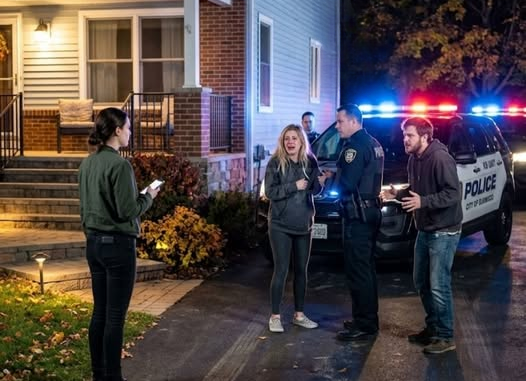
Twelve minutes later, the cops arrived. Courtney cried and pointed, claiming I’d cut the power and was endangering the baby. I calmly presented the notarized documents and the recording. The officers’ expressions shifted as they reviewed the evidence.
“You understand this is an admission of fraud and grand larceny?” one asked.
Courtney turned pale. “I—I was joking—”
“You’re under arrest,” the officer said. Handcuffs clicked around her wrists. She screamed threats, promises, curses. I said nothing, watched her disappear in the squad car, wild-eyed.
It should have felt like victory. And in a way, it did.
Back in the pantry, everything was the same. Rug, chair, the faint outline of the baby monitor, heat pressing down—but the lockbox was gone. No cash, no passport, nothing but a sticky note with a smiley face. Travis had seen it earlier, had dismantled my last resources while I dismantled my life in the living room.
I laughed, sharp and hollow. I had won, and I was broke. Free of their debt. Standing at the edge of nowhere.
I replaced the board, smoothed the rug, picked up my bag, and left my grandmother’s apartment for the last time.
The heat outside was brutal. No destination, just direction: away—from Courtney’s screams, Grandma’s manipulations, Travis’s smirk, from a life where every decision was filtered through their needs.
I walked until my feet blistered, found a cash-only motel, and three days later boarded a bus north. The desert gave way to mountains, then green—each mile a thread between who I’d been and who I might be.
Six months later, I had a tiny Seattle studio. Rent paid on time, furniture thrifted or rescued, microwave dinners, hand-washed clothes, and a job I’d fought to reclaim after proving my identity had been compromised. It wasn’t perfect, but it was mine.
I checked a separate email address I’d set up months earlier—a silent pipeline to the family I’d left. Courtney’s name dominated the inbox. Evicted, debts piling, power cut, bouncing between temporary homes. Travis in jail, Grandma’s manipulations silenced. Dylan mentioned, asking after me.
I couldn’t save them. They didn’t want saving. But I could help Dylan someday.
At month’s end, five hundred dollars remained—my first money that wasn’t earmarked for someone else. I opened a new savings account: Dylan’s Freedom Fund.
Not much. But enough.
Real revenge wasn’t seeing them burn. It wasn’t gleeful justice. It was this: a futon, a tiny studio, a paycheck in my name, electricity, and a savings account under a kid’s name. Freedom built quietly, stubbornly, out of reach of their chaos.
If you’ve ever needed to burn a bridge to save yourself, know this: you can walk away. Lock the door. Build something better. You’re not an ATM with a heartbeat.
Some nights, Seattle rain taps my window. I think of that suffocating pantry—no vent, no space, just walls and a blinking camera.
I got out. Not cleanly, not without scars, but I got out.
And that is enough.
Leave a Reply