I returned home for Christmas carrying two things: a duffel bag and the weight of an $8,500 loan I had taken out to help my parents save their house. Three months earlier, my mother had called me in tears, overwhelmed by overdue bills, a looming mortgage, and mounting financial stress. My father had promised solemnly that if I helped them just this once, they would repay me by tax season. I was twenty-nine, working double shifts as a respiratory therapist in Chicago, barely able to cover my own rent, but when it came to family, I had no choice.
I imagined arriving at the house as it had been when I was a child—lights glowing in every window, my grandmother humming in the kitchen, my mom burning dinner rolls, my younger brother Dylan sneaking cookies before the meal. I envisioned the warmth, the laughter, the comforting chaos of family Christmases past. But when I pulled into the driveway, something immediately felt off. The house was dark, silent, and empty. No music, no decorations—except for a half-dead wreath hanging crookedly on the front door.
Inside, the silence was heavy. The Christmas tree stood in the corner with nothing underneath. Dirty dishes were piled in the sink. And at the kitchen table sat my grandmother, Ruth, wearing her familiar blue cardigan, quietly eating cold mashed potatoes out of a plastic container. The air felt thick with tension. I asked where everyone was, and she silently nodded toward the kitchen counter. There lay a folded note, written in my mother’s familiar handwriting.
I unfolded it and read the message: “Spent your $8,500 loan on a family cruise. Take care of her.”
That was all. No apology, no explanation—just a cold instruction, as if Grandma were some chore they had left behind. My chest tightened. All my sacrifices, the late nights working double shifts, and the financial risk I had taken to help my parents had been disregarded completely. While I had trusted them, they had used the money to escape on a Caribbean cruise, leaving Grandma behind.
Grandma, ever composed, set down her fork and explained quietly, “Your mother said the ship stairs would be too much for me. Then I heard your father telling Dylan to hurry, or they’d miss boarding.” Her calm voice contrasted sharply with the storm of anger and humiliation inside me. I realized I wasn’t just furious—I felt betrayed, exploited, and humiliated. I had given everything I could, and they had treated me like an ATM.
But Grandma, with her decades of wisdom, reminded me gently, “Don’t apologize for other people’s greed, Claire.” Those words grounded me. I realized it wasn’t enough to be hurt; I needed to act. That morning, she calmly opened a cash box and folders of old bills, statements, and receipts, showing me how she had quietly supported my parents over the years, often covering shortfalls herself. Despite all her help, they had used my money for selfish indulgence.
Together, we consulted her attorney and discovered an important legal detail: part of the house had been protected under a life-estate arrangement years earlier, meaning that my parents’ misuse of funds and abandonment of Grandma could have legal consequences. That evening, we changed the locks on the house. It wasn’t revenge—it was a careful, measured action to protect both Grandma and the home she had secured.
I also uncovered the details of the cruise. Using the family email and accounts, I verified that my parents had booked seven passengers, including a balcony package, and paid in full just days after my loan cleared. I documented everything, filed a police information report, and secured all evidence. The situation had escalated from a family dispute to a matter of legal and financial accountability.
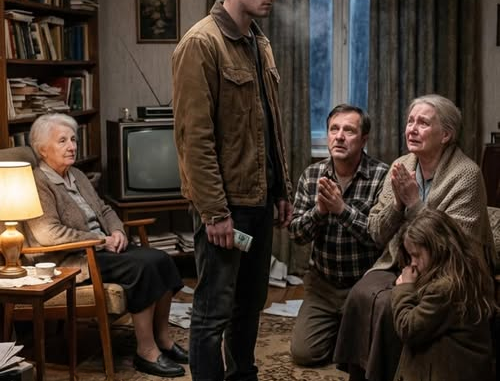
By the fourth day of their cruise, my parents realized something was wrong. Their accounts were under review, the garage and home apps were restricted, and the police report had been filed. Calls and frantic texts came pouring in, begging for explanations. I stayed calm, recounting only the facts: I had arrived home for Christmas, found Grandma alone, and discovered their misuse of the loan. The panic was immediate. They returned home to confront a reality they hadn’t anticipated: there were consequences for their choices, legal oversight, and Grandma’s clear boundaries.
We negotiated repayment of the $8,500 loan, reimbursement for Grandma’s past financial assistance, and enforcement of legal agreements regarding the house. My parents were forced to confront the consequences of their actions. That Christmas, the focus shifted. Instead of mediating endless family drama, I reclaimed control, and Grandma and I shared a quiet, peaceful dinner together—roast chicken, green beans, and a store-bought pie—while snow drifted outside and the Christmas lights glowed softly.
For years, I had believed that being a good daughter meant endless sacrifice, forgiveness, and trying to fix everyone else’s mistakes. That Christmas taught me something different: protecting what is good sometimes means refusing to protect what is rotten. It isn’t easy, and it can be painful, but it brings a peace that is earned through action and boundaries. Now, every Christmas, Grandma and I share a meal together in my home, without lies, without debt, and without shame—just a hard-earned, quiet peace.
Leave a Reply