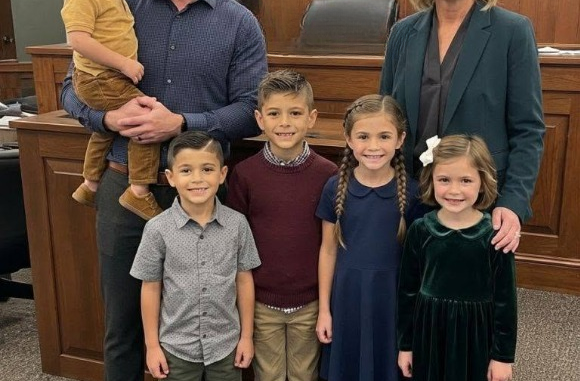
The Story I Told Judge Miller Was True—But It Wasn’t the Entire Story.
The full truth was more complicated.
For three weeks, I had been trying to make sense of it myself before I found myself sitting in that courtroom, listening as the state’s attorney finished outlining every reason why approving my request would be risky.
When he sat down, the room fell silent.
Judge Miller leaned forward and studied me carefully.
Not casually.
He looked at me like someone who had spent decades deciding whether people genuinely meant what they said or were simply good at sounding sincere.
My name is Carter.
I was twenty-nine years old, single, and living alone in a three-bedroom house in Ohio.
I worked as a licensed electrician.
The pay was steady—not enough to make me wealthy, but enough to keep the bills paid.
I had been paying my mortgage for two years and had managed to save $22,000.
That savings account mattered to me.
I had spent years building it because I hoped to buy a larger property one day.
Then I saw a photograph.
It had been posted through an emergency placement program for children who urgently needed homes.
Five siblings sat together on a worn bench.
A seven-year-old boy.
A five-year-old girl.
A four-year-old boy.
A two-year-old girl.
And a toddler barely eighteen months old.
What stayed with me wasn’t their faces.
It was how they were sitting.
The oldest boy had his arm wrapped around one sibling.
She was holding another.
The younger boy was supporting the toddler on his lap.
Every one of them seemed to be clinging to the others.
They weren’t posing.
They were holding themselves together.
I saved the photo.
Then I went about my evening.
I ate dinner.
Watched television.
Went to bed.
The next morning, I went to work.
But I couldn’t stop thinking about that picture.
Eventually, I looked up their case.
The oldest was Marcus.
Then Amara.
Joel.
Destiny.
And the youngest, who would later tell me her name was Nina.
Their mother had died unexpectedly from a stroke.
She was only thirty-two.
Marcus had been the one to call emergency services.
By that night, all five children were in temporary care.
There was no involved father.
No relative willing to take all five.
Some people offered to take one child.
Others offered another.
Nobody stepped forward for everyone.
The agency’s plan was to separate them across multiple homes.
Not because anyone wanted to.
Because there seemed to be no alternative.
When I called the agency, a social worker named Debra explained the situation.
“We simply haven’t found a home that can take all five.”
“What if someone could?” I asked.
She paused.
“If someone had the space, stability, background approval, and commitment, we would absolutely consider it.”
“How long do you have before they’re separated?”
“Nine days.”
That answer stayed with me.
That afternoon, I bought lumber.
Not because I suddenly knew exactly what I was doing.
I didn’t.
For hours I went back and forth between believing I should help and believing I had completely lost my mind.
Then I did what made sense to me.
I started calculating.
Income.
Mortgage.
Utilities.
Insurance.
Food.
Then I estimated the cost of raising five children.
The numbers were intimidating.
At first, they didn’t work.
So I started making adjustments.
I could take on additional jobs.
I could convert my detached workshop into sleeping space.
I could spend my savings.
The land I wanted someday could wait.
Those children couldn’t.
I ran the numbers again.
And again.
Then I called my sister, Dana.
After listening to everything, she asked one question.
“Are you asking if this is a reasonable idea?”
“Yes.”
“It isn’t.”
I laughed.
Then she added,
“But unreasonable and wrong aren’t the same thing.”
That was exactly what I had been thinking.
“You realize what this means, right?” she asked.
“No.”
It was the most honest answer I could give.
“But I also know I can’t stand by while five siblings get separated.”
There was a long pause.
Then she said,
“I’ll help.”
For the next nine days, I worked nonstop.
I transformed the workshop into a bedroom.
Built bunk beds.
Bought bedding, toys, and five car seats.
Hired an attorney.
And emptied the savings account I had spent years building.
On the eighth day, the agency approved moving forward if I passed an emergency home study.
The assessor walked through every room.
She inspected the bedrooms, kitchen, bathrooms, and backyard.
Then she stood looking at the bunk beds.
“You built these?”
“Yes.”
She asked about childcare.
Work schedules.
Trauma.
Discipline.
Support systems.
And finally:
“What don’t you know?”
That answer came easily.
“A lot.”
I admitted I didn’t know what it would be like helping grieving children heal.
I didn’t know how to handle every challenge that would come.
I didn’t know exactly what each child would need.
But I knew one thing.
“If nobody takes them together, they’ll be separated.”
She nodded.
I thought about Marcus.
Seven years old.
Calling 911.
Trying to keep his family together after losing his mother.
“I can give him a place where he doesn’t have to carry that burden alone.”
The next day, I received approval.
The hearing was scheduled.
And I spent the next forty-eight hours trying to answer one question:
Why was I really doing this?
The answer wasn’t simple.
Growing up, my own father left when I was young.
My mother worked constantly.
My sister carried responsibilities no child should have carried.
I knew what happened when kids were forced to become adults too soon.
And when I looked at Marcus, I saw that same weight on his shoulders.
Then there was the house.
For two years, I had lived alone in it.
It always felt like it had been built for something bigger than myself.
When I saw that photograph, something clicked.
I finally understood what that space was for.
Maybe it sounds sentimental.
But it was true.
At the hearing, the state’s attorney listed every concern.
I was single.
Inexperienced.
Financially stretched.
Taking on five children at once.
He was right.
Every concern was valid.
Then Judge Miller asked me a simple question.
“What is your real reason for doing this?”
I looked at the children sitting behind me.
Marcus held Amara’s hand.
The others sat close together.
And I told the truth.
I talked about the photograph.
The bunk beds.
The car seats.
The savings account I had emptied.
Then I talked about Marcus.
“That boy is seven years old,” I said. “He called for help when his mother died and has spent weeks trying to hold his family together.”
I took a breath.
“I can’t fix what happened to them. I can’t promise I’ll be perfect. But I can give them a home where Marcus doesn’t have to be the adult anymore.”
The courtroom stayed silent.
“They’ve already lost their mother,” I said. “I don’t want them to lose each other too.”
Then I said the only thing that really mattered.
“I’m not claiming I can do this perfectly. I’m saying I’m willing to do it.”
Judge Miller studied me for a long moment.
Then he asked whether I understood the lifelong responsibility I was accepting.
I said yes.
He looked at the children.
Then back at me.
Finally, he signed the order.
When Debra explained what had happened, Marcus asked one question.
“We’re all going together?”
“Yes,” she told him.
“All of you.”
The relief on his face is something I will never forget.
That afternoon, all six of us drove home.
The truck was louder than any vehicle I had ever ridden in.
Someone cried.
Someone narrated everything outside the window.
Someone fell asleep.
And Marcus sat quietly, watching.
When we arrived, he stared at the house.
“This is it?”
“This is it.”
Inside, he stood in the doorway of the bedroom I had built for them.
“You made those beds?”
“Yes.”
“They’re good.”
Then he looked at me.
“You don’t have to do this.”
“No,” I said.
“I don’t.”
“Then why are you?”
“Because you need someone who will. Because I can. And because I want to.”
He was quiet for a moment.
Then he admitted something no seven-year-old should ever have to say.
“I’m tired.”
“Not sleepy tired,” he added.
“I know.”
The first night was chaos.
The months after that were harder.
And better.
Little by little, the children settled in.
Marcus learned he could be a kid again.
Amara filled the house with drawings.
Joel kept everyone talking.
Destiny tested every boundary she could find.
Nina decided one morning that I was “Daddy” and returned to eating cereal as if she hadn’t just changed my life.
The adoption became official months later.
Judge Miller attended again.
The paperwork was signed.
The children became my family permanently.
And life kept moving forward.
There were birthdays, school events, sleepless nights, laughter, tears, and ordinary moments that slowly became extraordinary because they belonged to us.
A year after bringing them home, we sat around the table eating chocolate cake.
I looked at five children who no longer worried about being separated.
I looked at the family we had built together.
A year earlier, everyone had told me it was impossible.
It wasn’t impossible.
It was difficult.
There’s a difference.
And every single day, it has been worth it.
Because families aren’t built in a courtroom.
They’re built one day at a time.
And then they keep going.
Leave a Reply