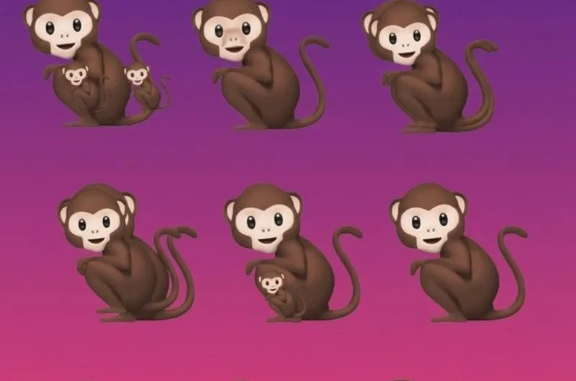
At first, the image seems playful and simple—rows of cartoon monkeys arranged neatly. But the bold caption draws attention, claiming that the number of monkeys you spot could reveal something about your personality. Most people instinctively start counting, curious to see what their result might suggest. Yet the image’s true purpose goes beyond mere counting; it’s an invitation to explore how perception works and why different people can view the same picture and notice entirely different things.
Responses vary widely. Some quickly count only the obvious monkeys, while others take time to spot hidden or smaller shapes, which can dramatically alter the total. This illustrates a key point: perception isn’t just about what’s in front of us, but how we interpret it. Our brains organize visual information based on attention, experience, and mental habits, highlighting certain details while letting others fade into the background.
It’s important to remember that claims linking these kinds of images to personality traits, like narcissism, aren’t scientifically validated. Such statements are mostly designed to spark curiosity and engagement, not provide psychological truth. Still, the exercise can be revealing in its own way. People who notice fewer elements may naturally focus on the bigger picture, while those who spot more details might be drawn to subtle patterns. Neither approach is better or worse—they simply reflect different ways of processing information.
Ultimately, the appeal of these visual puzzles lies in their ability to make us pause and reflect. They blend curiosity, self-awareness, and a touch of fun into a single moment. The real lesson isn’t labeling ourselves but recognizing that our perspective is just one of many. Sometimes, taking a closer look—or a second look—reveals details we initially missed. And that small shift in attention can change how we see not only an image, but the world around us.
Leave a Reply