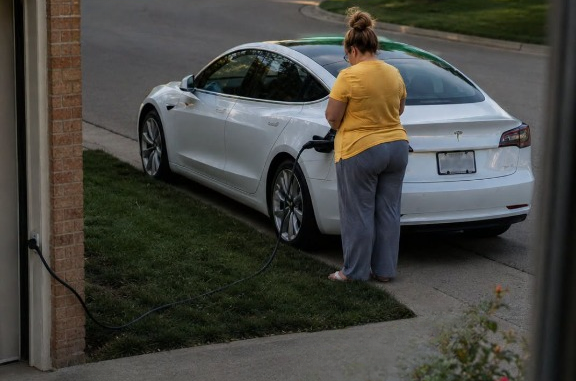
The $227 electric bill was sitting next to my coffee when I realized something wasn’t right. At 64, living alone in the suburban home I had once shared with my late husband, Eleanor, I normally used very little electricity. Somehow, my monthly bill had almost doubled, even though I barely touched the thermostat and had fairly new appliances. I called my daughter Diane, checked the meter twice, and even considered the possibility that the utility company had made an error. Then, a few nights later, I heard a soft humming outside my bedroom window. There, beside my garage, was my neighbor Monica’s white electric car, plugged directly into my outdoor outlet.
I confronted Monica right away, expecting her to apologize or at least look embarrassed. Instead, she simply shrugged and said that since I lived alone, I probably didn’t need much electricity anyway. She even offered me $10, as if that could make up for weeks of using my power without permission. I told her to unplug immediately and watched her drive away looking annoyed. Apparently, Monica thought I would eventually let it go, just as I had when my garden decoration vanished and my lawn mower was returned damaged and empty. But the next morning, rather than getting into another argument, I made a quiet change she never saw coming. I hired an electrician to install a locking, weatherproof cover over the outdoor outlet and placed a motion-activated security camera aimed only at my driveway and garage. I also collected several months of electric bills and contacted my insurance agent and an attorney to find out how I could protect myself if the unauthorized use continued. The attorney told me to keep detailed records instead of escalating the situation, especially in case the matter ever reached court. I also went through my mortgage paperwork, property boundaries, and estate documents, realizing I had become far too casual about protecting the home my husband and I had worked for decades to build.
That evening, Monica came back with the same charging cable in her hand. She walked toward my garage, only to find the outlet securely locked. The camera captured her testing the cover, staring straight at the lens, and then walking away. The next morning, when she complained, I calmly told her that no one had permission to use electricity from my property.
Two weeks later, something unexpected happened. Monica’s landlord, Mr. Alvarez, came to my door after hearing about the dispute. He told me he had discovered she was behind on several utility payments and had also made unauthorized changes to his rental property. When her lease expired, he chose not to renew it because of concerns involving his own property—not because I had asked him to take action. A month later, I watched Monica pack her last boxes into a moving truck. Meanwhile, my little garden gnome had mysteriously found its way back beside my mailbox.
I didn’t celebrate Monica’s troubles or feel the need to humiliate her. I simply realized something I should have understood much sooner: being kind doesn’t mean giving someone unlimited access to your home, your money, or your patience.
Leave a Reply