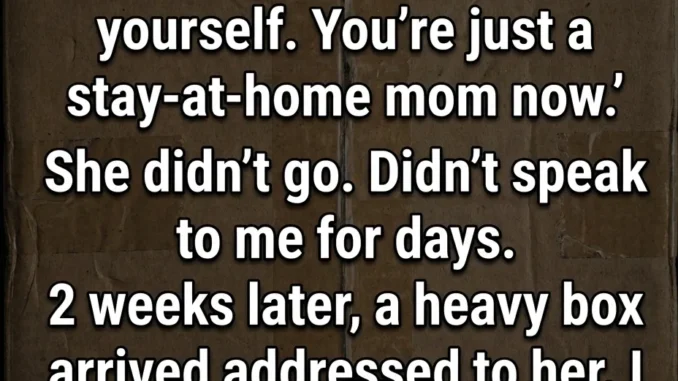
The night my wife told me about her upcoming high school reunion, I barely lifted my eyes from my phone. She stood in the doorway holding the invitation, looking hopeful and a little nervous. Without thinking, I made a careless remark—something that seemed insignificant to me at the time but ended up meaning far more than I realized.
I told her she might feel uncomfortable there, that people had changed, and maybe going wasn’t really worth it. She didn’t argue or try to convince me otherwise.
She simply folded the invitation and placed it on the table.
That silence should have told me everything, but I didn’t understand what my words had done. Over the next few days, the atmosphere in our home slowly changed.
Everything still got done. Meals were prepared, schedules continued, and responsibilities were handled. But the warmth between us seemed to disappear. Our conversations became short and necessary, while the laughter we used to share was replaced by long stretches of silence.
I told myself she would eventually get over it.
What I failed to understand was that my comment had gone far beyond hurting her feelings. I’d made her question whether I still saw the woman she had been before becoming my wife.
Two weeks later, a large, heavy package arrived with her name on it.
I carried it inside, curious about what could be inside. I knew I shouldn’t open it, but curiosity got the better of me. When I lifted the lid, I discovered pieces of a part of her life I’d never taken the time to truly understand.
Inside were certificates, awards, professional documents, and reminders of accomplishments she had achieved through years of hard work. They showed a talented, ambitious woman who had once built a career she was incredibly proud of.
There were also handwritten notes, plans, and old reminders of dreams she had put aside.
Suddenly, I saw my wife differently.
She hadn’t lost that woman.
She had simply chosen to put parts of herself aside while building our family.
For the first time, I understood just how much I’d taken for granted.
When she came home, I didn’t wait for another opportunity.
I apologized—not merely for discouraging her from attending the reunion, but for failing to appreciate everything she was beyond the roles she fulfilled at home.
We talked for hours.
She told me about the person she used to be, the dreams she’d once had, and the things she still wanted to accomplish. I listened.
That conversation taught me something I should have understood years earlier: respect isn’t something you automatically earn by being married to someone. It’s something you have to demonstrate through your words and actions every day.
When the reunion finally arrived, she decided to attend.
Not to impress anyone.
Not to prove that she had succeeded.
She simply wanted to reconnect with the person she had always been.
And this time, I supported her completely.
I watched her leave with pride, finally understanding that some of the greatest strength and value in a person can be found in the quiet sacrifices they make for the people they love.
Leave a Reply