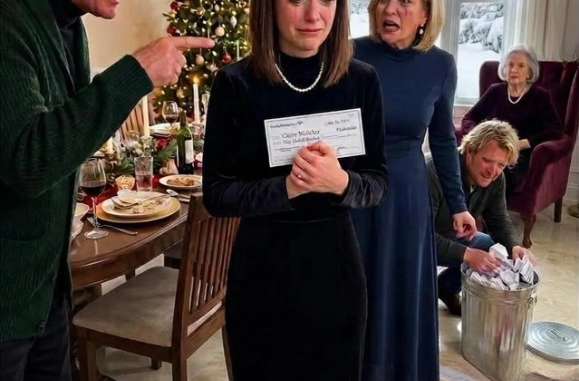
At our family Christmas dinner, Grandma Evelyn Whitaker placed a $5 million check in front of every guest. The room fell silent for a few moments before chaos erupted. My brother Marcus burst into laughter, nearly choking on his drink, while my cousin turned her check into a paper airplane and tossed it into the mashed potatoes. My father dismissed the whole thing, threw his check aside, and warned me not to embarrass myself. At 32, recently divorced and juggling two jobs in Denver, I couldn’t imagine Grandma giving away that kind of money. Still, she squeezed my hand and quietly said, “Don’t lose it, Claire.” While everyone else mocked her, I slipped my check safely into my coat.
The following morning, I walked into First Mountain Trust Bank, expecting the manager to explain that the check was fake. Instead, branch manager David Callahan carefully examined it, lowered the office blinds, and told me it was completely legitimate. The money came from a family trust, and each recipient had just 72 hours to deposit or formally accept their check. Anyone who ignored, destroyed, or refused theirs would lose the inheritance, with the remaining funds going to those who accepted. David also revealed that Grandma had undergone professional medical evaluations after certain relatives attempted to declare her mentally unfit and seize control of her finances. Before I left, he handed me a sealed letter from Grandma and informed me that my father had already contacted the bank, falsely claiming he held power of attorney over her affairs.
I rushed to Grandma’s house, where my father, my aunt, and Marcus were confronting her. Calmly, she presented medical reports from two physicians, documents from her estate lawyer, and records showing that family members had tried to gain control of her assets under the excuse of helping with taxes. Her attorney explained that the trust was legally valid, every check could be cashed, and anyone who discarded theirs would receive no replacement. My father threatened legal action, but the paperwork, bank records, and his false claim of power of attorney left him with little ground to stand on. The house, investments, insurance policies, and the rest of Grandma’s estate had never been his to control. When the deadline arrived, only two people had accepted their checks—me and Rosa, Grandma’s devoted housekeeper, who had received hers privately.
My father eventually challenged the trust in court, but the judge ruled against him. I used the money responsibly, clearing my debts, purchasing a modest townhouse, and leaving my second job while continuing to work. Rosa bought a home nearby and remained a cherished part of Grandma’s life. Grandma enjoyed three peaceful years afterward, and our weekly Thursday lunches became my favorite tradition. At her funeral, I never mentioned the checks or the courtroom battle. Instead, I spoke about her kindness, how she remembered everyone’s name, and how she believed that giving someone your attention was the purest form of love. Today, a copy of that check hangs in my office—not as a reminder of wealth, but as a symbol of the dignity Grandma carried throughout her life. She taught me that patience and respect reveal a person’s true character long before money ever can.
Leave a Reply