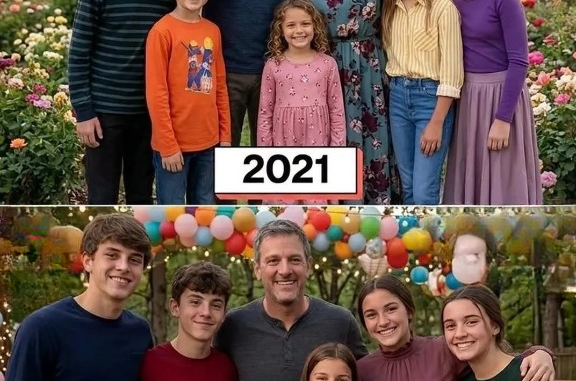
The Room Fell Silent When Lily Handed Me Julia’s Final Message
The house became completely quiet when ten-year-old Lily placed an old, worn shoebox in my hands and softly said, “Mom told me you were supposed to open this today.”
Five years had passed since my wife, Julia, died, but my hands trembled as if she were standing right beside me.
Inside the box were five handwritten letters, a flash drive, and a notarized document that Julia’s sister had kept hidden away.
For those five years, I had raised Maya, Ben, Sophie, Noah, and Lily while Julia’s wealthy parents constantly questioned whether I had the right to be their father. They had endless resources—private schools, lawyers, and financial security. I had a modest home, an $1,850 mortgage, everyday expenses, and a payment plan for my attorney.
What I didn’t know was that Julia had left behind one final message for the people who tried to take our family away from me.
I first met Julia in a laundromat after a ripped laundry bag sent socks rolling across the parking lot. A few days later, I helped her when she came up short by $23 at a grocery store checkout.
After that, I kept showing up.
When her children’s biological father vanished, I became the person they could count on. I fixed things around the house, went to school meetings, helped with homework, and stood by Julia when Lily was born.
Eventually, we got married.
But Julia’s parents never believed love and commitment were enough. To them, money and status mattered more.
When Julia became seriously ill, her parents made her an offer. They promised her a home, private education for the children, and lifelong financial support—but only if she left me and allowed them to become the children’s primary guardians.
Then Lily pressed play.
And Julia’s voice filled the room with the truth her parents had tried to keep hidden.
The recording revealed that Julia had rejected their offer completely.
She explained that I was the children’s father in every way that truly mattered because I had stayed through the difficult moments—the financial struggles, the fear, the illness, and all the ordinary days that built a family.
Her father argued that love alone was not enough. Her mother suggested I should only have a small role in their lives, limited to birthdays and occasional visits.
Julia knew they might try to challenge me legally, so she documented their conversation with her attorney and included her wishes in her estate plans.
She also recorded everything we had sacrificed together—the medical expenses, insurance battles, mortgage payments, and the small but meaningful efforts we made to build a future for the children.
A week later, Julia’s parents held a fundraiser in her name, publicly praising themselves for everything they had supposedly done.
Then Lily stepped forward.
She took the microphone, played the recording, and allowed her mother’s own words to reveal the truth.
The crowd didn’t break into cheers.
There was only silence.
But that silence changed everything.
Several donors stepped away. Julia’s siblings distanced themselves from the project. Eventually, a smaller organization was created to support widowed and single parents instead.
Julia’s parents didn’t lose their money.
They lost the ability to control the story and rewrite Julia’s decisions.
A few weeks later, Julia’s mother came to our home without lawyers, gifts, or demands.
She simply asked if there was any chance to rebuild what had been broken.
Lily agreed to one visit at Julia’s grave, with no arguments about custody and no conditions attached.
Standing there, she read the final message Julia had left behind:
“Family is not determined by who has the most money. It is built by the people who stay when life becomes the hardest.”
That day didn’t erase years of pain, and forgiveness didn’t happen instantly.
But when the memories became difficult and emotions became heavy, everyone stayed.
And for the first time, staying was enough.
Leave a Reply