When my mother-in-law suffered a serious hip fracture, her recovery was expected to take months. Although her daughter lived less than half an hour away, there always seemed to be a reason she couldn’t help—work commitments, errands, or inconvenient timing. I tried not to criticize, but each time I watched my mother-in-law struggle to stand or reach for her walker, I couldn’t ignore how absent the person she always called her “closest friend” had become.
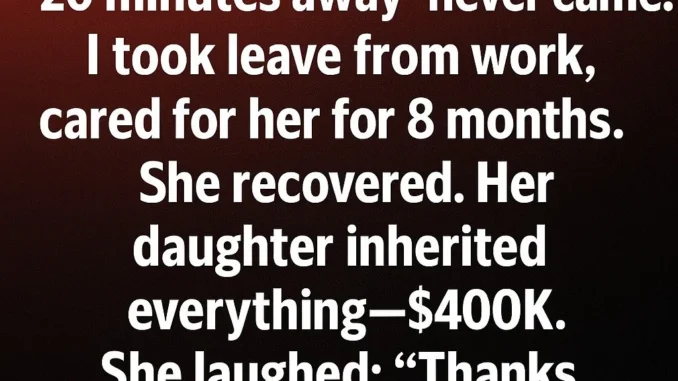
After her doctor explained she would need daily assistance, I made the difficult decision to take an extended leave from work. It meant putting my own career on hold, but caring for her felt like the right choice. The days were demanding, yet little by little she grew stronger. I celebrated every small milestone, from taking a few steps without assistance to preparing simple meals on her own. Watching her regain her confidence made every sacrifice worthwhile.
About eight months later, she was living independently again and enjoying life much more than anyone expected. Then her daughter announced it was time to discuss the will.
According to the documents presented that day, everything—her home, savings, and investments totaling nearly four hundred thousand dollars—had been left to her daughter. I hadn’t expected to inherit anything, so the decision itself didn’t bother me.
What hurt was what came next.
Her daughter smiled at me and casually said, “Thanks for looking after her. You saved us a fortune in caregiving costs.”
The comment hit harder than I expected. I glanced at my mother-in-law, who quietly lowered her eyes without saying a word.
The following morning, my phone rang before dawn.
This time, her daughter sounded completely different. Panic had replaced confidence. She insisted I come over immediately because something was wrong with the estate paperwork.
When I arrived, she handed me a stack of legal documents with shaking hands.
It turned out the will she had proudly shown everyone was no longer valid.
Just days before her accident, my mother-in-law had quietly signed a newer version.
Under the updated will, her daughter would still inherit the family home. However, nearly all of her financial assets had been directed toward a charitable foundation supporting elder-care services and families caring for aging relatives.
Her daughter couldn’t believe it.
“She would never have done this,” she repeated over and over.
But I remembered the many conversations we’d shared during those long months of recovery. She often talked about wanting her life to make a difference after she was gone. She spoke about gratitude, compassion, and helping families facing the same challenges we had experienced together.
Later that day, my mother-in-law asked to speak with both of us.
She calmly explained that changing her will wasn’t intended to punish anyone or reward someone else.
It was a decision she had made long before her injury because she believed elder-care programs deserved greater support. She wanted her estate to provide comfort for families facing difficult times.
Then she turned to me and quietly thanked me for standing beside her when she needed someone most.
Finally, she looked at her daughter and encouraged her to reflect on the past—not with shame, but with honesty.
The months that followed weren’t easy, but our family slowly began healing. Difficult conversations replaced silence, and understanding gradually replaced resentment.
Looking back, I realized the greatest gift wasn’t money or property.
Real compassion leaves a legacy far more lasting than any inheritance ever could.
Leave a Reply