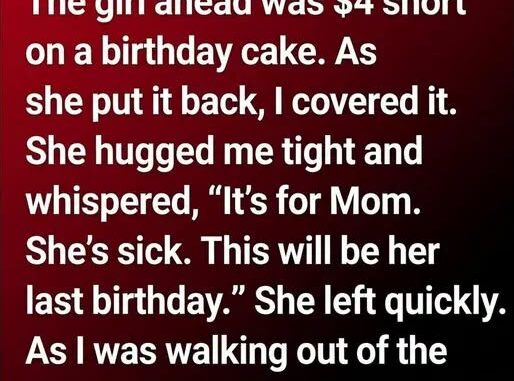
The cashier gently pushed the little birthday cake back across the counter, and the girl’s expression immediately fell. She couldn’t have been more than thirteen, yet she didn’t argue, complain, or ask a stranger for help. She simply looked at the cake with its pink frosting, gave a small nod, and quietly said, “Thank you anyway.” Around us, the store buzzed with activity—shopping carts rolling, people talking, customers impatiently waiting in line. But the quiet sadness on her face made everything else seem distant. Before she could leave, I stepped forward and told the cashier to put the cake back in the bag.
The cake was $18.99, and the girl was short by exactly four dollars. Her name was Lily, and she was wearing a worn purple jacket that seemed far too light for the chilly March weather. I handed the cashier a five-dollar bill and told her to keep the change, thinking it would be nothing more than a small gesture. But instead, Lily suddenly wrapped her arms around me and held on tightly, as if I had done something much bigger.
“It’s for my mom, Claire,” she whispered. “She’s been sick, and this might be the only birthday we get to celebrate together at home.”
Before I could ask anything else, she grabbed the cake and rushed out of the store.
I finished paying for my groceries, but I couldn’t stop thinking about what Lily had said. As I walked across the parking lot toward my car, I reached into my coat pocket for my keys and felt something folded next to them. I pulled it out and found a small piece of notebook paper. On it was a child’s drawing of a cake with a single candle and two people holding hands.
Below the drawing, Lily had written:
“Thank you for noticing me when I didn’t know what to do.”
I turned the paper over and found an address written on the back—but the message underneath made me freeze.
The note explained that Claire had recently come home after weeks of medical treatment. Lily had been using the money she earned from babysitting to help pay for groceries. Their insurance covered some of the medical costs, but unpaid bills continued to grow alongside their mortgage payments. Claire was terrified that they would lose the small home her parents had left them.
The following morning, I reached out to a local community group led by an attorney who helped families facing financial struggles and complicated legal situations. Within days, volunteers stepped in with meals, transportation assistance, and guidance about an education savings account that had been created for Lily. It didn’t magically solve every challenge they faced, but it gave their family the support they needed to breathe again.
A week later, Lily and Claire invited me into their home for coffee and a slice of the leftover birthday cake. Claire looked exhausted, but her smile was genuine, and Lily seemed completely different from the quiet girl I had seen at the checkout counter.
They thanked me over and over, though I knew that five-dollar bill had only been the beginning. It opened the door, but many people helped carry them through what came next.
I kept Lily’s note in my wallet for years afterward.
It reminded me that people rarely announce when they’re struggling. Sometimes, the greatest acts of kindness begin with something simple—taking the time to notice.
Leave a Reply