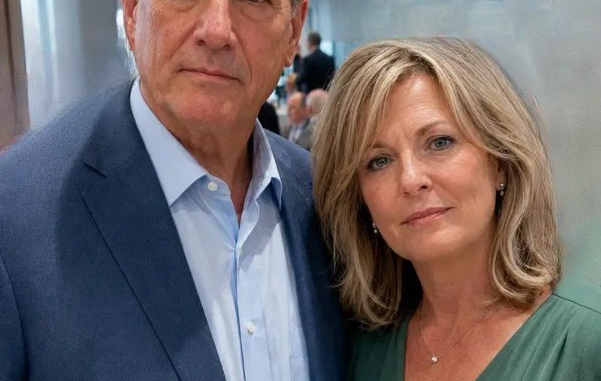
I was supposed to spend my retirement night surrounded by cake, kind words, and a quiet smile for the husband who had spent years making my career seem insignificant. Instead, Roy stood up in front of everyone and changed the entire evening into something none of us saw coming.
I was sixty-four years old when my company held my retirement celebration, and I thought the hardest part would be getting through the speeches without becoming emotional.
I had spent thirty-five years working for the same national insurance company.
I started as a receptionist wearing a borrowed blazer and uncomfortable shoes that barely fit. By the time I retired, I had become the senior operations coordinator.
It wasn’t a flashy title, but whenever a claim became complicated, a branch office made a mistake, or a customer couldn’t understand their policy, I was the person people called.
I knew how to solve problems.
I knew how to explain confusing situations without making people feel embarrassed.
That meant something to me.
But it never seemed to mean much to my husband.
Roy always referred to my career as “just office work,” saying it in a way that made three and a half decades of dedication sound like nothing more than filing papers and answering phones.
On the drive to the hotel, he looked at the entrance sign displaying my name.
“This is a lot of attention for a desk job,” he said.
I forced a small smile.
“It’s my retirement party, Roy.”
He simply shrugged.
“I’m just saying.”
When we entered the banquet hall, I saw how many people had come to celebrate me.
Coworkers.
Executives.
Former employees.
Longtime clients.
Community partners.
People who had taken time out of their lives just to be there.
One executive hugged me and told me the system I created years ago was still being used.
A claims employee told me she trained new hires using my notes.
Someone else said I had made a difficult company easier to navigate.
For the first time in a long time, I allowed myself to feel proud.
I felt appreciated.
I felt noticed.
Then the speeches started.
My boss, Mr. Whitaker, stepped up to the microphone.
He talked about my reliability, my patience, and the trust people had placed in me.
“Some people keep an organization standing without ever asking for recognition,” he said. “Marlene has been that person for decades.”
The room filled with applause.
I looked down because my eyes were already filling with tears.
Then Roy stood up.
He tapped his spoon against his glass.
Everyone smiled, assuming he was about to say something loving.
I thought so too.
He raised his champagne.
“Since everyone is celebrating new beginnings tonight, I might as well announce one of my own.”
The room became quiet.
“I’m filing for divorce.”
For a moment, I couldn’t process the words.
Then he added:
“Maybe now Marlene can stop acting like her little office job made her important.”
A shocked silence spread through the room.
Someone gasped.
A chair scraped against the floor.
I stood there staring at him while he smiled like he had just delivered a clever joke.
But I knew immediately.
This was planned.
He had waited until everyone was gathered to celebrate me so he could take that moment away.
I stood up, ready to leave before I completely fell apart.
Then Mr. Whitaker spoke.
“Roy, sit down.”
I stopped.
He walked back to the microphone.
“You’re about to hear the part of Marlene’s career you never bothered to ask about.”
Roy gave a small laugh, but he sat.
“For months, the board has been creating a community insurance education program,” Mr. Whitaker continued. “A program designed for retirees, widows, families, and small-business owners who often pay for insurance without fully understanding what they have.”
He paused.
“We needed someone patient. Someone trusted. Someone who could explain complicated information in a way that made people feel confident.”
Then he looked directly at me.
“We built it around Marlene.”
I whispered, “Oh my God.”
He smiled.
“She agreed to help design the program after retirement. Tonight, after receiving final approval from the board, I am officially asking her to lead it.”
The room erupted into applause.
“And the program will carry her name.”
People stood before he even finished speaking.
I looked at Roy.
His expression had changed.
He wasn’t angry.
Not yet.
He looked shocked.
He had spent years chasing recognition.
Community events.
Networking.
Photos.
Handshakes.
He wanted people to see him as important.
But I had never needed to chase attention.
I had earned respect by helping people.
Then Mr. Whitaker invited another person to speak.
A woman near the front stood up.
It took me a moment to recognize her.
“Carol,” I whispered.
She smiled.
“Hi, Marlene.”
She turned toward the room and began telling her story.
Eight years earlier, her husband had become seriously ill. The medical bills came before she even understood what their insurance covered.
She was overwhelmed, grieving, and ready to give up.
“I spoke with three different people,” Carol explained, “and everyone told me something different. Then I was connected with Marlene.”
I remembered her.
The nervous woman holding a folder and apologizing every few minutes for asking questions.
Carol continued.
“She stayed late. She called different departments. She sat with me while I cried into a cup of awful coffee. And she told me, ‘We’re going through this one step at a time until it makes sense.’”
My eyes filled with tears.
“She helped me understand what I was entitled to. She helped me fight for it. And because of her, I later became someone who helps other families facing the same struggles.”
Then she looked around the room.
“Some jobs don’t seem important until the moment you desperately need the person doing them. Marlene mattered to me long before tonight.”
Mr. Whitaker handed me the microphone.
For a moment, I didn’t know what to say.
Then I looked at Roy.
He sat there stiffly, watching me, almost waiting for me to become the woman who always stayed quiet.
But I wasn’t that woman anymore.
I took the microphone.
“This is definitely not the speech I expected to give tonight.”
A few people laughed.
“Carol, thank you. And yes, I remember that coffee. Somehow it was worse than ours, and I didn’t think that was possible.”
The room laughed again.
My shoulders relaxed.
“I spent most of my career explaining things people were afraid to ask about—policies, claims, deadlines, and complicated language that should have been simple.”
I looked around the room.
“I thought I was only doing my job.”
I paused.
“But tonight I realize something. Helping people understand something that scares them is not small. It matters.”
Then I announced the first workshop for the new program, which would be open to the public the following month.
Everyone applauded.
And just like that, Roy’s attempt to embarrass me became the beginning of my next chapter.
After the party, he followed me into the parking lot.
“Marlene, wait.”
I turned around.
His anger was mixed with something else now.
Fear.
“You let them make me look bad.”
I almost laughed.
“You announced our divorce at my retirement party.”
He rubbed his face.
“I didn’t think it would become all of that.”
“No,” I said. “You didn’t.”
Then he finally admitted what was really bothering him.
“I couldn’t stand it. The way everyone looked at you. The applause. The stories. I couldn’t stand watching people realize you mattered.”
I stared at him.
“I do matter.”
He looked away.
Then quietly said:
“I felt invisible.”
And there it was.
Not confusion.
Not a mistake.
Jealousy.
“You confused being loved with being the center of attention,” I told him.
He looked at me like he was hearing my voice for the first time.
Maybe he was.
I opened my car door.
“Marlene, don’t do this.”
“You already did.”
That night, I stayed with my friend Elaine.
The next morning, I packed a suitcase, contacted a lawyer, confirmed the program schedule, and called Carol to ask if she would speak at the first session.
She agreed before I even finished asking.
A few weeks later, the first workshop began.
The room was filled with retirees carrying folders, adult children taking notes for their parents, small-business owners, widows, and couples who were nervous to ask their first questions.
I stood at the front with a microphone clipped to my shirt.
I felt calm.
This wasn’t a performance.
This was something I knew how to do.
Halfway through explaining beneficiary information, I noticed Roy sitting in the back row.
Of course he came.
Maybe some part of him expected me to fall apart.
I didn’t.
A man raised his hand.
“I’ve had this policy for ten years, and nobody has ever explained the appeal process in a way I could understand.”
I smiled.
“Then let’s go through it together.”
After the workshop, people stayed behind.
A woman asked for my contact information for her sister.
A volunteer signed up for the next session.
A man shook my hand and told me he wished someone had explained things that clearly years ago.
When the room finally emptied, Roy waited near the door.
“You really don’t need me anymore, do you?”
There was no arrogance in his voice.
Only regret.
I looked around at the people I had helped, the conversations still happening, and the lives being made easier.
Then I answered:
“I needed respect, Roy. You were the one who decided it wasn’t necessary.”
He had no response.
I turned around and walked back into the room.
Not toward applause.
Toward purpose.
Leave a Reply